What Is the Rehab SEO Trust Stack?


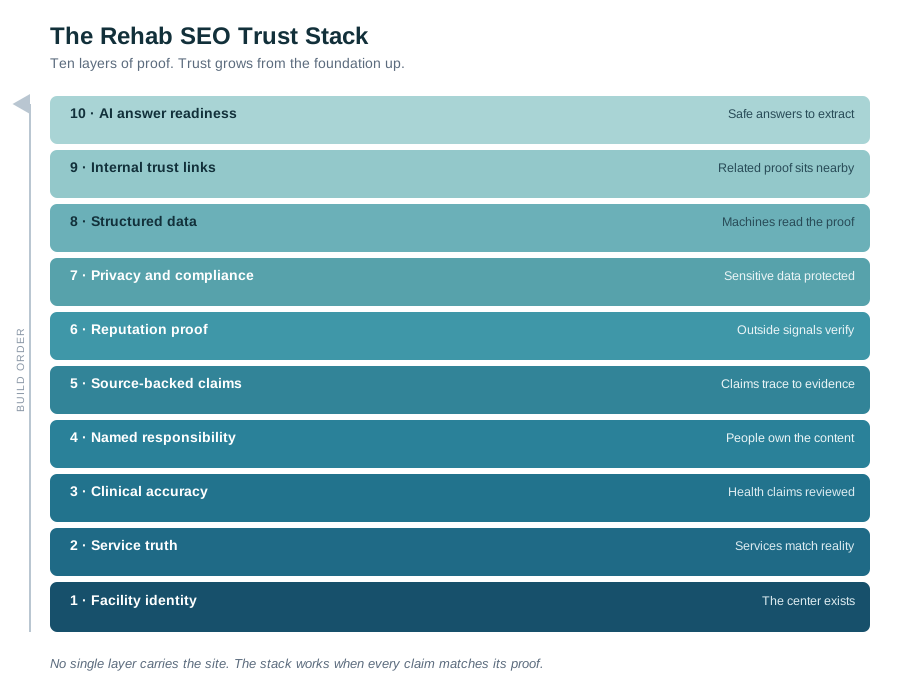
The Rehab SEO Trust Stack links every treatment-page claim to visible proof. It spans ten layers, from facility identity to AI answer readiness. Build the foundation first, and families phone you, never bounce.
The proof behind the page
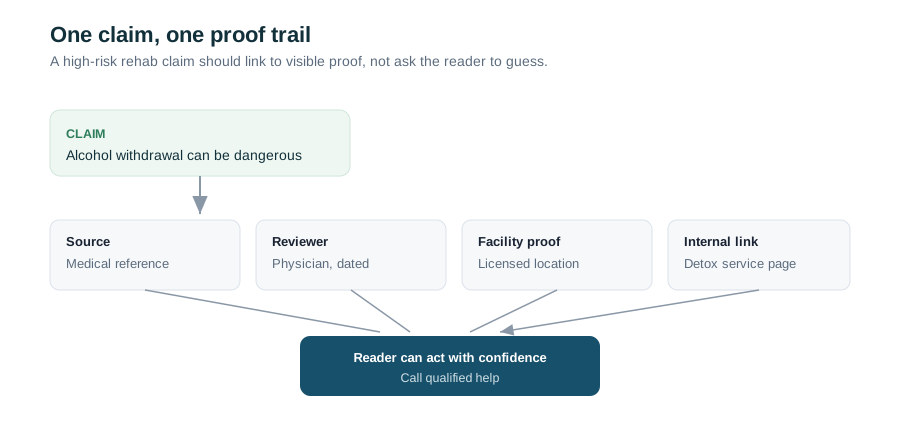
The Trust Stack forms the proof behind a treatment website. You attach every claim to a name, a source, or a license. Readers, Google, and AI answer tools then trust the page fully. Belief converts a quiet search into an admissions call.
Why polish alone loses the family
Great design alone never earns a rehab admission. Most pages push the reader into detective work. The page names detox, then hides the license proof entirely. A broken proof chain pushes that worried family straight to a competitor.
Layer 1: Facility identity
Facility identity proves your center exists as one genuine organization. Publish your legal name, address, phone, service area, and the services offered here. The Google business rules demand accuracy and one profile per location.
| Place | What to show |
|---|---|
| Website footer | Legal name, phone, address |
| Location page | Address, services, staff, photos |
| Google Business Profile | Matching name, address, phone, category |
A matching profile earns local trust and lowers your cost per admission.
Layer 2: Service truth
Service truth answers one question: does the page describe your genuine services? LegitScript standards require a disclosed address, honest scope, and truthful photos. Weak copy reads “complete addiction treatment in California.” Strong copy names the licensed San Diego facility and its exact programs. Honest detail filters out mismatched leads and lifts your qualified-call rate.
Layer 3: Clinical accuracy
Some rehab pages can harm a reader when the wording goes wrong. Route every claim about detox, withdrawal, medication, or crisis through a clinician. The helpful-content documentation from Google rewards genuine, demonstrated expertise.
| Page content | Who reviews it |
|---|---|
| Packing list | Staff |
| Insurance steps | Billing |
| Residential program page | Clinical lead |
| Dual diagnosis page | Mental-health professional |
| Alcohol withdrawal page | Physician |
| Medication (MAT) page | Addiction-medicine doctor |
| Crisis content | Medical and compliance |
Accurate, reviewed pages survive core updates and shield your license. Our piece on when a rehab page needs a medical reviewer goes deeper.
Layer 4: Named responsibility
Name the people behind every clinical page. A responsibility box shows the author, the reviewer, the scope, and the date.
- Written by: name and role
- Reviewed by: name and credential
- Reviewed for: accuracy and safety wording
- Last checked: month and year
- Sources: listed near medical claims
A vague credit reads our team reviewed it, and a reader learns nothing. A named doctor with a review scope wins belief within seconds. That belief lifts your page-to-inquiry conversion.
Layer 5: Source-backed claims
Every high-risk claim needs a source beside it. Attach evidence to withdrawal risk, medications, treatment levels, outcomes, and licensing. ASAM frames the level-of-treatment wording, while SAMHSA and FindTreatment.gov anchor access and crisis content. Sourced pages survive scrutiny and earn quotes inside AI answers.
Layer 6: Reputation proof
Outside voices sell your center harder than any headline you write. Show Google reviews, alumni feedback, accreditation, license references, clinician bios, and facility photos. CARF and The Joint Commission lead accreditation, and SAMHSA approves both. Never fake outcomes, testimonials, or photos, because Google rater materials flag unsupported high-risk claims. Verifiable reputation wins the family who compares three centers at once.
Layer 7: Privacy and compliance signals
Rehab visitors hand you painful, private details on every form. Surface a footer privacy policy, a HIPAA notice, consent wording, and a call-tracking disclosure. Link the 988 Suicide and Crisis Lifeline on crisis pages. LegitScript standards fold HIPAA duties into collected data. Visible privacy proof lowers legal risk and lifts form completions.
Layer 8: Schema markup
Schema markup hands machines a clean read of the page. The Google schema documentation recommends JSON-LD for most sites. Mark up Organization, LocalBusiness, Person, Article, FAQPage, BreadcrumbList, and sameAs. The Organization markup rewards name, address, logo, and sameAs. Matched schema earns richer results and cleaner AI extraction.
Layer 9: Internal trust links
Internal links should move proof, beyond rank power alone. Point a detox page to the reviewer bio, service page, and admissions. Add insurance, location, and the privacy note as well. A location page points out to the profile, photos, directions, and programs. Linked content on a solid structure ranks as a cluster, never a lone page.
Layer 10: AI answer readiness
AI answer tools quote short, grounded, well-sourced passages. Hand each page an answer-first opening, a reviewer block, sourced claims, and location facts. AI Overviews and chatbots reward that structure more every month. The page answers the query, then proves the answer. Machine citations then send you free, high-intent visibility.
The trust stack in one view
| Layer | What it proves |
|---|---|
| Facility identity | The center is genuine |
| Service truth | The services match reality |
| Clinical accuracy | A clinician checked the claims |
| Named responsibility | A named person owns the page |
| Source support | Claims trace to evidence |
| Reputation proof | Outsiders vouch for you |
| Privacy signals | Private data remains protected |
| Schema markup | Machines read the proof |
| Internal trust links | Related proof lives one click away |
| AI answer readiness | AI tools quote you with confidence |
A worked example: a detox page
A detox page needs proof at every layer, never one keyword. Map each page part to the proof behind it.
| Page part | The proof it carries |
|---|---|
| Opening | Detox scope and safety framing |
| Clinical section | Physician-reviewed wording |
| Risk section | Withdrawal claims backed with sources |
| Location block | Address and facility details |
| Reviewer box | Medical director name and scope |
| Admissions block | Intake steps and contact method |
| Privacy block | Form and call-data note |
| FAQ | Direct answers in safe wording |
| Schema | Article, Organization, Person, Breadcrumb |
A stacked detox page converts high-intent readers into admission calls. A thin page indexes, then loses them at the decision.
How to audit a rehab page
Walk these ten steps before you publish anything.
- Name the core claim.
- Rate the claim risk level.
- Match the reviewer to the claim.
- Attach sources near medical claims.
- Show the author and reviewer.
- Add the review date and scope.
- Confirm services against the facility.
- Confirm address and phone against the profile.
- Add internal links to proof pages.
- Add schema that matches the page.
One failed step halts new content until you mend it. Open a full pass with a drug rehab SEO audit.
What the trust stack is never
The trust stack works as no trick, hack, or badge pile. It earns belief through one visible proof trail. Google publishes no official trust-stack rule anywhere. The stack converts public Google direction into a working method. A full drug rehab SEO strategy extends it further.
Frequently Asked Questions
What is the Rehab SEO Trust Stack?
The Rehab SEO Trust Stack works as a proof system for treatment sites. It connects facility facts, clinical review, sources, reputation, privacy, links, and schema. Readers and machines verify every high-risk claim, and admissions calls rise.
Does Google require a rehab trust stack?
No. Google publishes no trust-stack rule. The stack converts public Google direction on helpful content, E-E-A-T, and YMYL into a working method for treatment sites.
Does every rehab page need every layer?
No. Higher-risk pages need more layers. Detox, withdrawal, medication, and crisis pages need clinical review, sources, and named authorship. A packing list needs accurate staff review.
How does the trust stack help AI Overviews?
It hands AI systems safer passages to quote. Names, credentials, sources, dates, schema, and proof links help a machine connect each claim with evidence.
What should a rehab site fix first?
Begin with the highest-harm pages. Detox, withdrawal, medication, dual-diagnosis, and crisis pages come first. Location, insurance, and admissions pages follow.
Get Expert Advice
Professional consultation for your business needs. Connect with our experts today.