Do Rehab Websites Need Medical Reviewers to Rank on Google?


Google does not strictly require medical reviewers to rank rehab websites, but its highly recommended. Because addiction treatment falls under Google’s YMYL (Your Money or Your Life) classification. The helpful-content documentation from Google calls E-E-A-T a quality idea, never a ranking factor. No E-E-A-T score lives inside the algorithm.
Google adds weight to strong E-E-A-T on YMYL health topics. Such topics cover health, safety, finances, and public welfare.
For drug rehab SEO, clinical review builds a trust layer. It helps where a page covers detox, withdrawal, medication, or diagnosis. A reviewer also removes unsafe claims before publication.
A reviewer will never rescue weak SEO copy. Thin pages still need stronger facts, sources, structure, and proof.
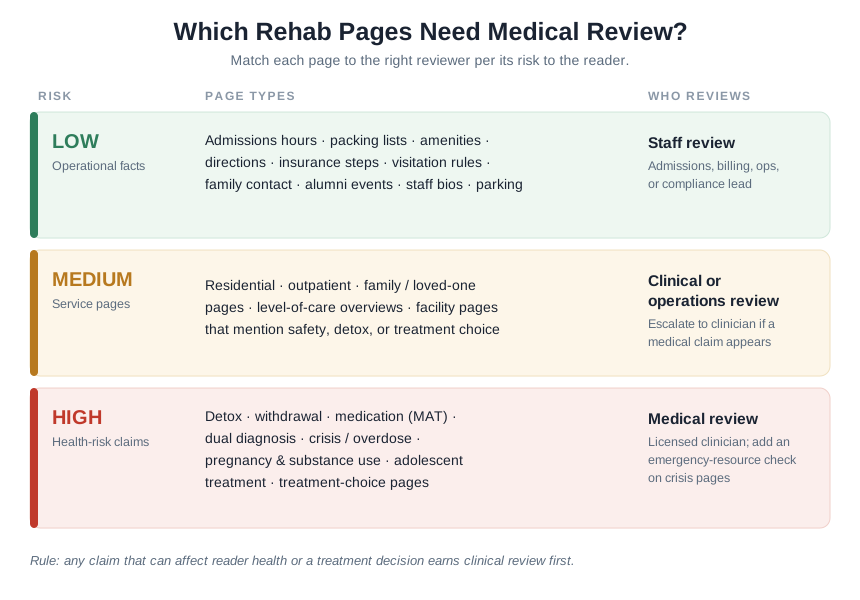
Use Medical Review On These Pages
Use medical review where bad advice can harm a reader. Rehab content can affect health, safety, and treatment choices. The Google rater rulebook holds the highest bar for YMYL pages.
| Page topic | Review level |
|---|---|
| Alcohol withdrawal | Physician or medical director |
| Opioid withdrawal | Physician or medical director |
| Benzodiazepine withdrawal | Physician or medical director |
| Medication-assisted treatment | Addiction medicine reviewer |
| Dual diagnosis | Qualified mental health reviewer |
| Trauma therapy | Therapist or clinical director |
| Crisis or overdose topics | Medical reviewer, plus emergency resource check |
| Pregnancy and substance use | Physician review |
| Adolescent treatment | Clinical and compliance review |
Health-risk claims earn clinical review before you publish them.
Use Staff Review On These Pages
Some rehab pages need accuracy, along with operational review.
- Admissions hours
- Packing lists
- Facility amenities
- Directions
- Insurance verification steps
- Visitation rules
- Family contact rules
- Alumni event pages
- Staff introductions
- Location parking details
Admissions staff can confirm intake and call details. Billing staff can verify each payment and insurance detail. Operations staff review facility facts, and compliance staff review consent wording.
A facility page can still need medical review. That happens when a page mentions safety, detox, medication, or treatment choice.
Match Each Claim To A Reviewer
Different claims need different reviewers on the page.
| Claim type | Best reviewer |
|---|---|
| Intake process | Admissions lead |
| Insurance verification | Billing lead |
| Facility services | Operations lead |
| Privacy and consent | Compliance lead |
| Detox risk | Physician |
| Medication content | Addiction medicine reviewer |
| Therapy content | Therapist |
| Recovery education | Addiction counselor |
| Level of treatment | Clinical director |
Reviewer choice should follow the claim itself. Job title alone holds fairly weak value here. Scope, credentials, and matching topic expertise decide the value.
The American Society of Addiction Medicine calls its Criteria an evidence-based framework. ASAM connects people with service levels around individual needs.
Reviewer Checks
A reviewer should check the page before publication.
- Confirm treatment terms match actual services.
- Remove cure promises and guaranteed outcome claims.
- Flag home detox advice without medical oversight.
- Check medication statements against trusted sources.
- Add emergency resource links for crisis topics.
- Remove diagnosis from symptom lists alone.
- Check that sources support each medical claim.
- Mark outdated claims for revision.
- Confirm reviewer names and dates appear on page.
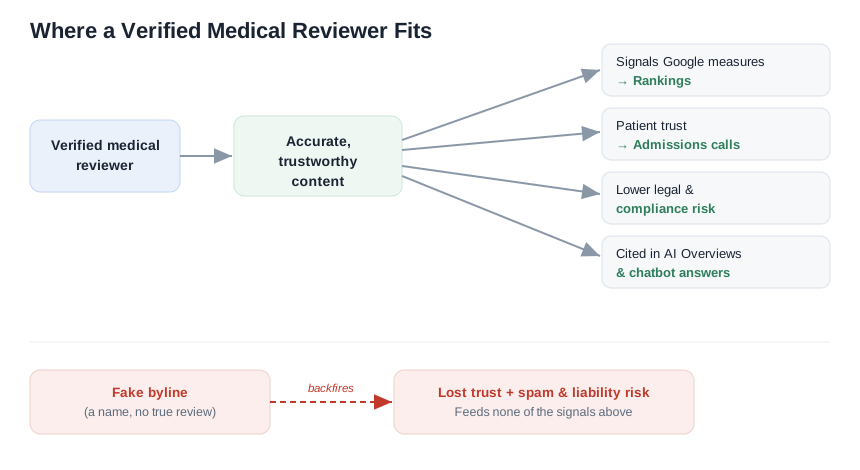
Strong review lowers risky claims across the page. It also makes each page far easier to trust and becomes one layer in the rehab SEO trust stack.
Reviewer Box For The Page
Add a visible review box near the article.
Author: name, role, and page topic
Medical reviewer: name, credential, and specialty
Reviewed for: medical accuracy, safety wording, treatment terms
Last review date: month, day, year
Sources: Google Search documentation, SAMHSA, ASAM, clinical sources
Emergency help: for crisis support in the United States, call or text 988
SAMHSA lists 988 as 24-hour confidential support. It also hosts FindTreatment.gov for treatment center search.
No Reviewer Yet
A rehab site can still publish its lower-risk pages. Use service facts, location facts, admissions steps, and payment details. Cite public health sources for general education. Pause any diagnosis, medication, detox, or suitability advice.
A shorter safe page beats a risky long page. Accuracy holds more value than extra word count.
SEO And AI Impact
Medical review never works as a ranking factor. It strengthens the trust signals that Google systems measure. It also makes pages safer for AI systems to cite.
- Authorship. Readers can see who wrote the page.
- Reviewer proof. Readers see who verified each health claim.
- Source strength. Medical claims link out to trusted sources.
- Claim safety. A reviewer removes risky statements early on.
- AI extraction. Short, sourced answers help AI systems cite safer passages.
The Google helpful-content documentation points owners toward author background, expertise, sourcing, and people-first purpose.
Paid Ads Use Different Rules
Organic rankings and paid ads work through separate systems. Google Ads restricts recovery-oriented addiction services for advertisers. Eligible advertisers must earn LegitScript Addiction Treatment Certification before those ads appear. Platforms have enforced the requirement since 2018.
The ad rule controls no organic ranking. It still shows how sensitive-category treatment applies to addiction services. Rehab SEO should reflect the higher risk level.
Final Answer
A rehab website can rank without medical review everywhere. Clinical review belongs on pages with health-risk claims. Detox, withdrawal, medication, dual diagnosis, and crisis pages need the strongest review.
Use staff review for low-risk operational pages. Use clinical review for treatment-decision pages, and show reviewer names, dates, and sources.
Medical review works as no ranking trick. It builds a trust system for high-risk content and forms part of the specialized SEO for addiction centers that this market demands. Confirm your current pages with a drug rehab SEO audit.
Frequently Asked Questions
Does Google require medical reviewers for rehab SEO?
No Google Search document requires a medical reviewer for rankings. Google rewards helpful, people-first content above keyword tricks. YMYL topics need stronger trust signals than ordinary topics.
Which rehab pages need medical review first?
Start with detox, withdrawal, medication, dual diagnosis, and crisis pages. Those pages hold the highest health risk.
Can admissions staff review rehab content?
Yes, admissions staff can review operational pages alone. They can review calls, intake steps, and visit rules. Clinical claims still need a qualified medical or mental-health reviewer.
Is a reviewer name enough?
No, a reviewer name alone falls short here. Add credentials, role, specialty, review date, and review scope. Place trusted sources near each medical claim.
Can medical review help AI visibility?
Yes, when review supports accurate, sourced, extractable answers. AI systems favor trustworthy, entity-rich, source-backed passages. A reviewer box helps once the review reads genuine.
Get Expert Advice
Professional consultation for your business needs. Connect with our experts today.