Local SEO for Rehab Centers: 7 Ways to Increase Treatment Inquiries


Local SEO for rehab centers helps nearby people find, verify, and contact treatment centers. Higher rankings alone cannot confirm better inquiry quality or more admissions.
Google ranks local results using relevance, distance, and prominence. Rehab centers need accurate center details before families contact admissions. Each rehab SEO strategy below addresses one local discovery or contact blocker. Inquiry results vary across centers, markets, programs, and admissions capacity.
Find Facility → Verify Treatment → Contact Admissions
How Local Search Becomes a Treatment Inquiry
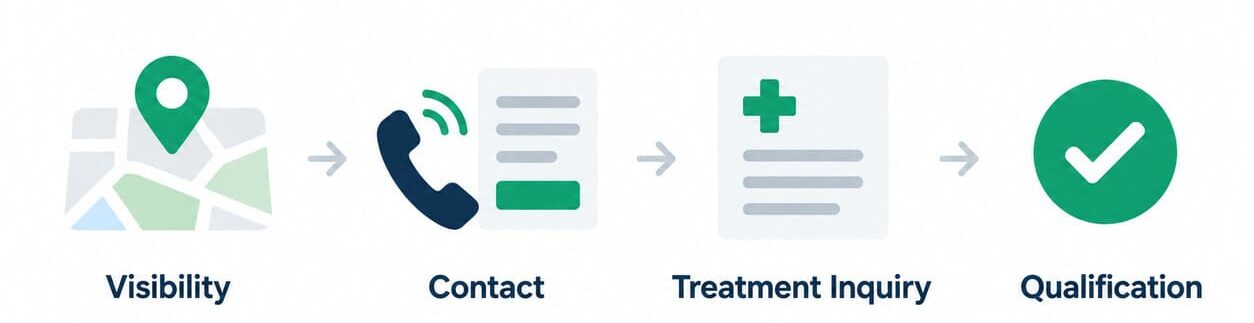
Local visibility becomes useful when nearby people reach the correct center and contact admissions. Treatment inquiries include questions about programs, insurance, availability, facilities, or admissions.
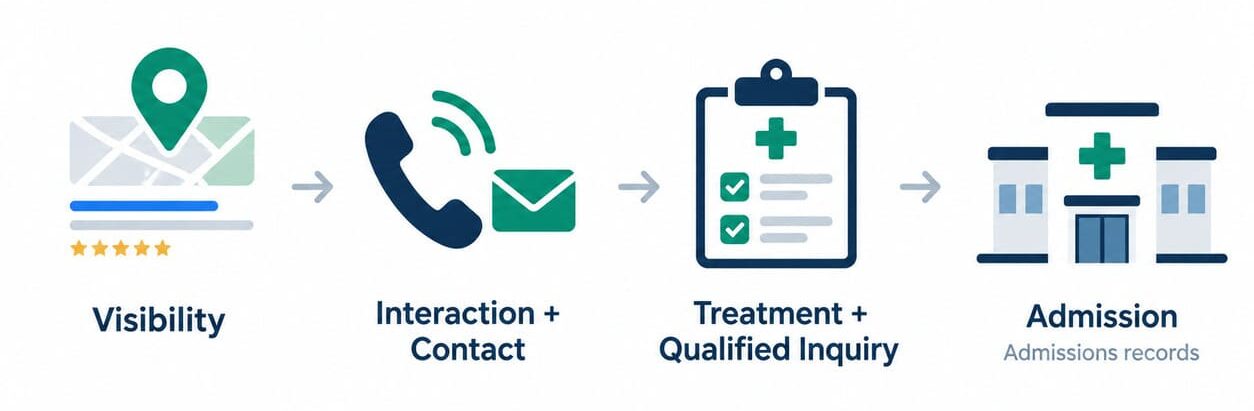
A website visit or profile call still needs treatment intent confirmation. For reporting, count a contact after admissions confirms treatment intent. Qualification depends on admissions criteria, program availability, payment, and location. Record confirmed admissions separately from qualified inquiries in admissions records.
- Visibility: The person sees the center in local results.
- Contact: The person calls, clicks, or submits a form.
- Treatment inquiry: Admissions confirms a question about treatment or access.
- Qualification: Admissions checks program availability and other admission criteria.
1. Match Google Business Profile With the Operating Treatment Facility
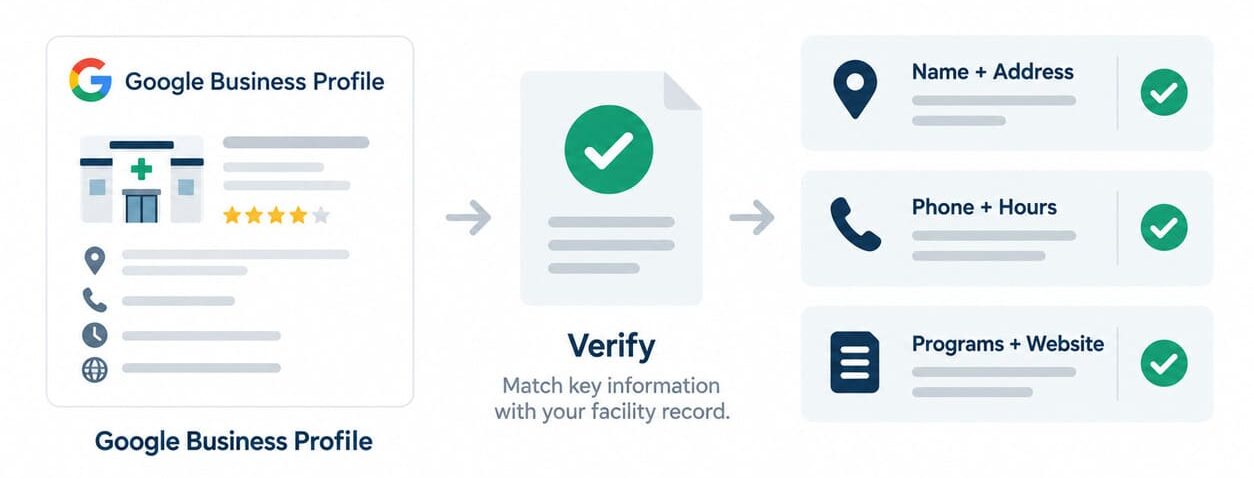
Google Business Profile for rehab centers should represent one eligible operating treatment facility. Complete facility information helps Google match profiles with relevant local searches. An outdated profile phone can send a family to the wrong location.
Use the facility name shown on permanent signage. Match the address and phone with verified facility records before publishing changes. List only programs offered from that location. Link the profile to the page describing the same operating facility. Avoid duplicate profiles, virtual offices, and addresses failing Google eligibility rules.
A 24-hour admissions line can differ from customer-facing facility hours. Publish profile hours that match customer-facing operations at that location. Use additional hours only where Google provides a suitable field.
| Business Profile field | Facility record to verify |
|---|---|
| Name | Public facility name |
| Address | Operating treatment location |
| Phone | Current admissions or facility number |
| Hours | Customer-facing facility hours |
| Category | Main business type |
| Services | Programs available there |
| Website | Matching facility page |
| Photos | Current facility images |
2. Send Local Treatment Searches to the Correct Treatment Pages
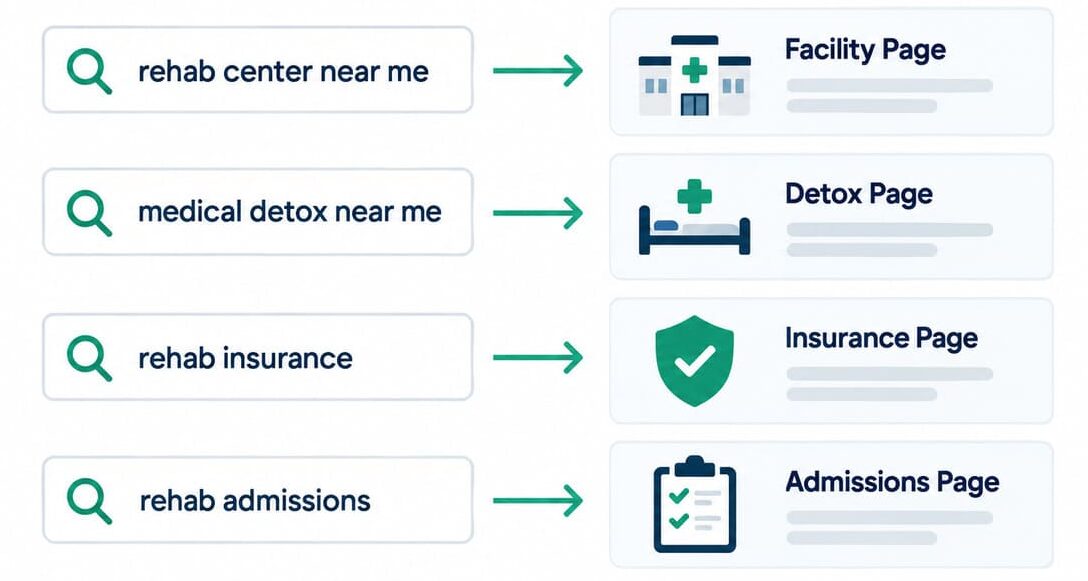
Local treatment queries should reach pages matching the treatment program or center people seek. Center searches differ from program-specific treatment searches. Insurance and admissions searches need pages focused on those exact questions. One homepage cannot answer every location, program, insurance, and admissions query well.
Send Near Me Searches to the Matching Facility Page
Broad center searches should reach the relevant operating location. The page should identify the operating center that matches the search.
Send Treatment Searches to the Matching Program Page
Program searches need pages focused on the requested treatment. Medical detox searches should reach centers that offer medical detox. IOP, residential, outpatient, and dual diagnosis searches need separate program pages. When several locations offer one program, show where that program is available.
Send Insurance and Admissions Searches to Dedicated Pages
Coverage searches should reach current insurance and payment information. Admissions queries need direct access to the appropriate admissions contact. Availability questions should lead to admissions for the matching location. Program questions should reach the relevant treatment page before admissions contact. Each page should answer its main question before requesting private contact details.
| Local query type | Where the search should land |
|---|---|
| Rehab center near me | Facility or location page |
| Drug rehab near me | Facility or location page |
| Medical detox near me | Detox program page |
| Intensive outpatient program near me | IOP program page |
| Rehab insurance | Insurance page |
| Rehab admissions | Admissions page |
3. Build Location Pages for Operating Treatment Facilities
Rehab location pages should document operating locations with information specific to each center. Each page needs facts unique to that location. Copied city pages can become doorway pages when local information barely changes.
Publish Facility-Specific Information
Show address, phone, directions, hours, and facility photos. List programs offered there and relevant accessibility details. Include admissions contact information for that location. A Dallas page should contain Dallas center facts beyond copied national text.
Facility facts to show
- Address and directions
- Customer-facing hours
- Facility phone
- Programs offered there
- Accessibility details
- Facility photos
- Admissions contact
Separate Location Pages for Multiple Operating Facilities
Treatment groups with multiple operating facilities need separate information for each eligible location. Separate location pages help people compare treatment centers. Link each eligible profile directly to its matching location page. Each location needs details specific to that center. A city page without a facility needs useful information specific to that city. Similar regional pages can create doorway abuse when they funnel visitors elsewhere.

4. Manage Google Reviews Without Exposing Treatment Information
Google reviews for rehab centers need honest requests and privacy checks before replies. Public reviews can help families compare recent experiences before contacting a treatment center. Public replies can reveal treatment relationships when staff confirm reviewer details.
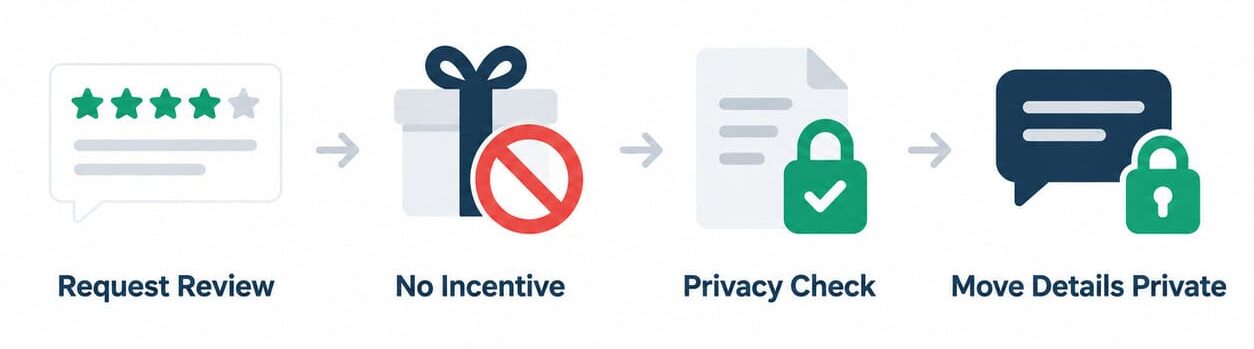
Review request: honest request, direct review link, no incentive.
Public reply: privacy check, neutral response, private contact for detailed concerns.
Request Honest Reviews
Ask for feedback after a genuine interaction with the organization or facility. Use a review link or QR code. Avoid review incentives connected with posting, changing, removing, or influencing review outcomes. Use neutral requests without asking customers for a specific rating.
Review Public Replies Before Posting
Part 2 protects certain substance use disorder patient records under federal confidentiality rules. The updated Part 2 requirements reached their compliance date on February 16, 2026. A reply can thank the reviewer without confirming any treatment relationship. Review reply templates for privacy before staff publish them.
Avoid confirming diagnosis, medication, insurance, admission, discharge, or treatment history. Move detailed concerns to a private contact channel. Privacy and compliance staff should approve the public response policy. Programs covered under Part 2 need privacy procedures for SUD patient records.
5. Update SAMHSA and Treatment Directory Records After Facility Changes
Rehab directory listings should match verified facility names, phones, websites, and services. SAMHSA uses the National Substance Use and Mental Health Services Survey, called N-SUMHSS. Eligible facilities completing N-SUMHSS can choose a FindTreatment.gov listing. The survey also records services, payment options, licensing, and website details.
N-SUMHSS remains voluntary for eligible treatment facilities. Continued FindTreatment.gov listing requires eligible facilities to complete N-SUMHSS every year.
Review records after phone, website, program, payment, or location changes. Verify facility records before treating any difference as an error. An outdated admissions number can misdirect treatment inquiries. Submit verified changes through the SAMHSA facility update process. Check the revised listing after the reported change appears.
A 2025 HHS OIG audit found inaccurate information for 66 sampled facilities. The audit used a 100-facility snapshot from April 2023. SAMHSA records support facility discovery without proving stronger Google local rankings.
| Public field | Source to verify |
|---|---|
| Facility name | Approved facility record |
| Address | Current location record |
| Phone | Current admissions number |
| Website | Official facility URL |
| Programs | Current program inventory |
| Payment | Current payment information |
| License | Current official record |
| Accreditation | Current accrediting record |
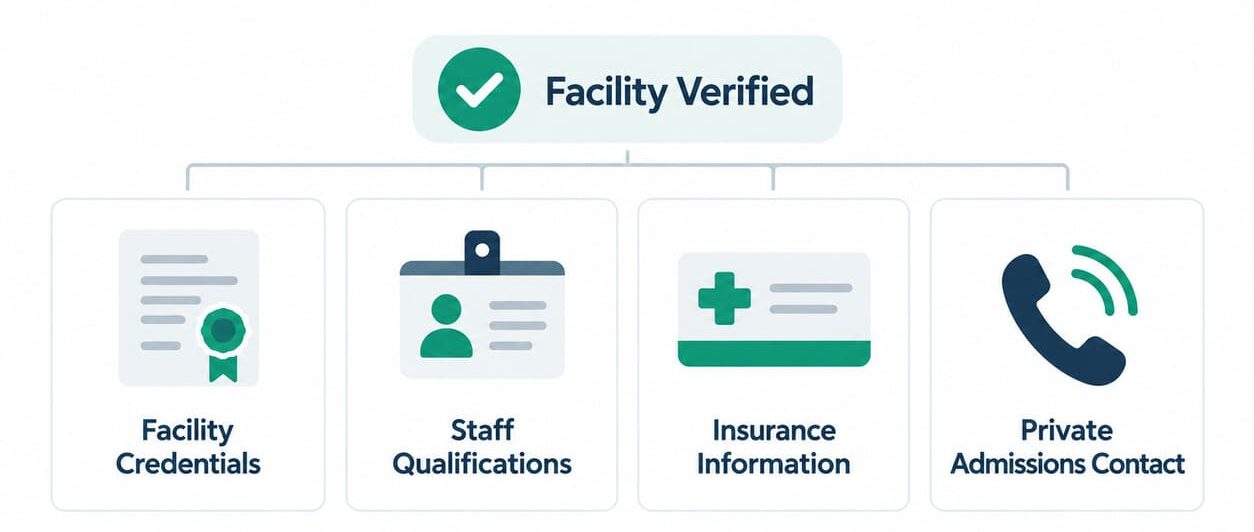
6. Show the Proof Families Check Before Contacting Admissions
Families can check treatment center credentials, staff roles, insurance details, and admissions contact. Families can check those details before sharing sensitive information with admissions.
Show Current Facility Credentials
Name applicable licenses and accreditations for each treatment center. Connect every credential with the exact organization or location holding that record. Show the issuing organization when a public verification source exists. Avoid broad accreditation claims without a named source supporting the specific location.
Show Staff Roles and Qualifications
List staff names with current roles connected to treatment delivery at each center. Match each credential with the person holding it. Use the same current role across staff, location, and treatment pages. Have a qualified clinical professional review clinical treatment claims before publication. Connect staff credentials only with locations where that person works.
Show Insurance and Private Contact Options
Publish current insurance information without promising coverage for every individual plan. Place the admissions phone near relevant program and location information. Offer private forms for people requesting treatment information. Place privacy information near forms collecting sensitive personal details. State in-network status only after verifying the specific insurance plan. A parent may check program details and insurance information before calling admissions.
Facility credentials | Staff qualifications | Insurance and private contact
7. Measure Local Search Against Treatment Inquiries
Local SEO measurement should connect visibility and contact data with treatment inquiry records. Rankings alone cannot prove qualified treatment inquiries or confirmed admissions.
Separate Visibility From Contact
Profile views measure exposure before someone contacts the treatment center. Business Profile interactions can include website clicks, calls, directions, and other actions. A call still needs admissions review before becoming a treatment inquiry. Admissions records can show which contacts included genuine treatment questions.
Define a Treatment Inquiry Before Reporting
Define treatment inquiries before comparing local SEO reporting periods. Count contacts asking about programs, insurance, facilities, availability, or admissions. Use one written definition across SEO and admissions reporting periods.
HIPAA-covered providers should review tracking tools before sensitive health information reaches analytics. Track source and page details without sending treatment details into analytics tools. A Maps call becomes a treatment inquiry after admissions confirms treatment intent. HHS notes a 2024 court ruling limiting part of its tracking guidance.
Separate Qualified Inquiries From Admissions
A treatment inquiry still needs qualification before admission becomes possible. Qualification criteria may include program availability, payment, geography, or capacity. Admissions teams should document the criteria used during each reporting period.
Qualified inquiries remain separate from confirmed admissions. Compare equivalent reporting periods before crediting one SEO change for inquiry growth. Record advertising, staffing, availability, and website changes beside performance data. Use approved first-party records and comparable dates before publishing inquiry growth claims. Admission outcomes belong in admissions records, separate from ranking reports.
Measurement ladder: visibility → interaction → contact → treatment inquiry → qualified inquiry → admission.
Separate Paid Addiction Advertising From Organic Local SEO
LegitScript and Google addiction advertising rules cover paid advertising; organic ranking uses separate systems. Local SEO covers organic visibility across Search, Maps, profiles, and websites.
Google restricts promotion of recovery-oriented addiction services through paid advertising policies. Google applies separate certification requirements to recovery-oriented addiction advertising in the United States. LegitScript certification covers advertising eligibility, separate from organic ranking.
Organic local SEO
Business Profile, facility pages, treatment pages, reviews, and organic ranking.
Paid addiction advertising
Google Ads, advertising certification, policy requirements, ad approval, and paid placement.
How Google AI Search Uses Rehab Facility Information
Google Search can surface rehab facility information in standard and AI results. Search and Business Profiles use separate systems to present facility information.
Normal SEO practices remain relevant for AI Overviews and AI Mode. Supporting pages must be indexed and eligible for a Search snippet. Google requires no separate AI markup for those Search features.
Frequently Asked Questions
Can One Rehab Brand Use Separate Profiles for Multiple Facilities?
Separate staffed facilities can qualify for individual profiles when each location meets eligibility requirements. Each profile should accurately represent its own operating facility.
Can a Rehab Center Create Pages for Cities Without a Facility?
City pages need local information beyond changed place names. A city page needs useful city-specific information without claiming a nonexistent facility. Substantially similar regional pages can create doorway abuse.
Does a SAMHSA Listing Improve Google Local Rankings?
Google documentation names no SAMHSA listing as a local ranking factor. SAMHSA records can help people discover participating treatment facilities and available services. Eligible facilities can choose a FindTreatment.gov listing after completing applicable N-SUMHSS requirements. Treat directory accuracy and Google local ranking as separate responsibilities.
Should a 24-Hour Admissions Line Make the Business Profile Open 24 Hours?
Google asks businesses to publish regular customer-facing operating hours. A 24-hour admissions phone can have different availability from facility hours. Use profile hours matching customer-facing operations at the location. Add extra hours only where Google provides a suitable field. A separate admissions phone can remain available outside those facility hours.
Can Multiple Rehab Locations Use One Admissions Phone Number?
Google recommends a local phone number over a central helpline when possible. The listed phone should remain under direct business control. Multi-location centers should choose the most appropriate number for each facility. One admissions line can still serve several locations when the business controls it. Staff should identify the correct location during each shared-line inquiry. Record the facility during contact when several locations share one admissions line.
Local SEO Should Help People Verify the Facility and Contact Admissions
Local SEO should help people verify the facility and contact the appropriate admissions team. The seven strategies connect local discovery with verification, contact, and inquiry reporting. Accurate reporting should separate visibility, inquiry quality, and confirmed admission outcomes. Review facility records, treatment pages, proof, and inquiry tracking before expanding local SEO.