Do SEO Strategies Differ For Detox, Outpatient, And Residential Rehab?


Yes. SEO strategies differ for detox, outpatient, and residential rehab because each service matches a different treatment need.
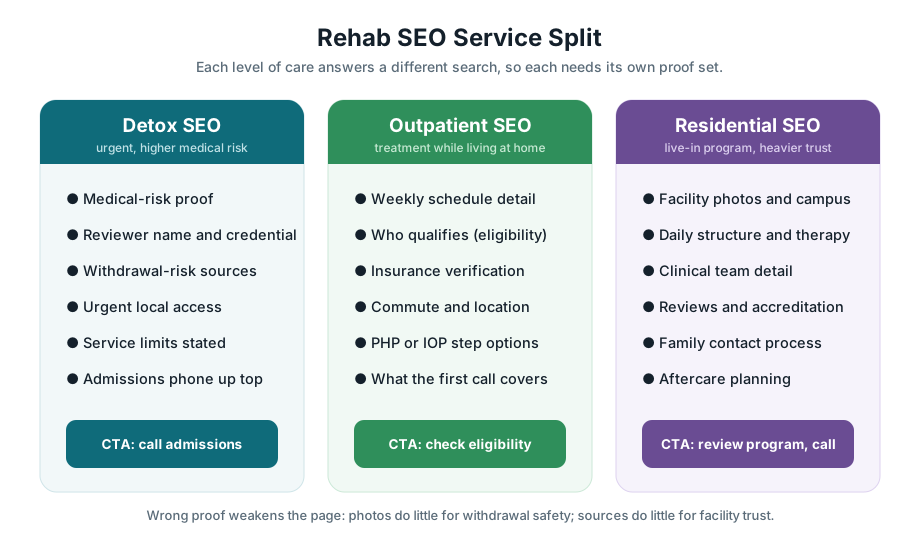
Detox SEO needs medical-risk proof, urgent access content, reviewer detail, withdrawal sources, and facility location signals. Outpatient SEO needs schedule detail, eligibility, insurance, commute, and program access. Residential rehab SEO needs facility proof, daily structure, clinical team detail, reviews, family support, and aftercare information.
ASAM describes addiction treatment across a continuum, with patient needs assessed across multiple dimensions before level recommendations. Rehab SEO should follow the same service split, because a detox search, outpatient search, and residential search ask for different answers.
Use Separate Pages For Each Service Level
Detox, outpatient, and residential rehab should have separate SEO pages. A single generic rehab page loses focus because each service answers a different question.
Build pages for:
- Medical detox
- Alcohol detox
- Opioid detox
- Residential treatment
- Outpatient treatment
- PHP
- IOP
- Dual diagnosis
- Admissions
- Insurance
- Facility location
A detox page should answer risk and access. An outpatient page should answer schedule and eligibility. A residential page should answer facility trust and program depth.
Detox SEO Needs Medical Proof
Detox SEO targets urgent searches with higher health risk. People may search for alcohol detox, opioid detox, benzodiazepine withdrawal, medical detox near me, or detox center in a city.
The page needs:
- Substance-specific detail
- Medical reviewer name and credential
- Review date
- Withdrawal-risk sources
- Service limits
- Facility location
- Admissions phone number
- Insurance link
- Crisis or emergency note when needed
Google documentation describes YMYL topics as topics that can affect health, safety, finances, welfare, or well-being. Detox content sits inside that risk area because unsafe wording can affect health decisions.
Outpatient SEO Needs Access Detail
Outpatient SEO serves people who need treatment while living at home. They may compare outpatient rehab, IOP, PHP, evening sessions, insurance, and travel time.
The page should answer:
- How many sessions happen each week
- How long sessions last
- Who qualifies for outpatient treatment
- Which locations offer the program
- How insurance verification works
- When PHP or IOP may make more sense
- What happens during the first call
Outpatient content should avoid vague promises. A useful page shows schedule, eligibility, clinical support, and payment steps.
Residential Rehab SEO Needs Facility Trust
Residential rehab SEO must prove the place, the program, and the team. A family wants to know where the person will live, what daily treatment looks like, who provides support, and what happens after discharge.
A residential page should include:
- Facility photos
- Room or campus details
- Daily schedule
- Therapy types
- Clinical team information
- Family contact process
- Aftercare planning
- Reviews
- Licensing or accreditation proof
- Admissions process
Residential searches carry a heavier trust burden. The page needs proof a family can check before calling.
Local SEO Changes Across Service Types
Local SEO should follow the service type. Google local ranking uses relevance, distance, and prominence. Google also recommends complete Business Profile details to help match a business with relevant local searches.
Detox pages need city and urgent service access. Outpatient pages need commute, schedule, and location detail. Residential pages need facility proof, reviews, and wider regional trust.
Use location content with actual facility facts:
- Address
- Phone
- Directions
- Photos
- Staff
- Services at that location
- Google Business Profile match
- Local citations
- Reviews
Copied city text weakens the page. Real facility detail strengthens local rehab SEO.
Keyword Strategy Should Split Service Intent
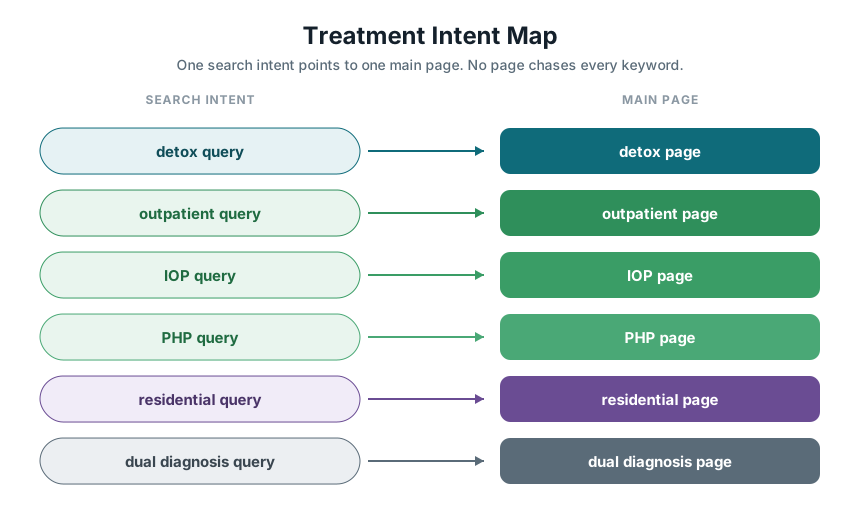
A rehab keyword list should separate detox, outpatient, residential, PHP, IOP, and dual diagnosis terms.
Use this service split:
| Keyword intent | Main page |
|---|---|
| medical detox near city | detox page |
| alcohol detox center | alcohol detox page |
| outpatient rehab near city | outpatient page |
| IOP program near city | IOP page |
| PHP rehab program | PHP page |
| residential rehab center | residential page |
| dual diagnosis treatment | dual diagnosis page |
| rehab insurance coverage | insurance page |
A detox keyword should land on a detox page. An IOP keyword should land on an IOP page. A residential keyword should land on a residential page.
Content Depth Should Match Service Risk
Each service needs a different depth level.
Detox content needs medical depth:
- Withdrawal risks
- Substance differences
- Medical supervision limits
- Reviewer proof
- Source support
Outpatient content needs access depth:
- Schedule
- Eligibility
- Insurance
- Location
- Step-up and step-down options
Residential content needs program depth:
- Facility
- Daily structure
- Clinical team
- Therapies
- Family support
- Aftercare
Google people-first content guidance asks site owners to create helpful content for people, with enough useful information for the reader goal.
Internal Links Should Follow The Treatment Journey
Internal links should help the reader move from the current decision to the next decision.
For detox pages, link to:
- Admissions
- Insurance
- Location page
- Reviewer bio
- Alcohol withdrawal resource
- Opioid withdrawal resource
For outpatient pages, link to:
- IOP
- PHP
- Insurance
- Admissions
- Schedule FAQ
- Location page
For residential pages, link to:
- Facility page
- Family program
- Therapy pages
- Aftercare
- Admissions
- Reviews or reputation page
Google documentation states that internal links help Google and users discover related pages, and descriptive anchor text helps readers and Google understand linked content.
Conversion Steps Should Match The Service
Each service needs a different call step.
Detox pages should make private phone contact easy because the need may be urgent. Outpatient pages should help users check schedule, eligibility, location, and insurance. Residential pages should support family trust before the call.
Use service-specific actions:
- Detox: call admissions for private medical-risk discussion
- Outpatient: check schedule and insurance
- IOP: check weekly hours and location access
- PHP: compare program intensity and schedule
- Residential: view facility, program, and admissions details
A single CTA across all service pages can miss the real decision behind the search.
Proof Burden Differs Across Service Types
Detox needs clinical proof. Outpatient needs access proof. Residential needs facility proof.
Use the right proof for the page:
- Detox: reviewer, sources, safety wording, service limits
- Outpatient: schedule, eligibility, location, insurance, clinical team
- Residential: photos, staff, daily structure, reviews, licensing, aftercare
Wrong proof weakens the page. Facility photos do little for withdrawal safety. Medical sources alone do little for residential trust. Schedule detail alone does little for facility quality.
Schema Should Support The Service Page
Schema markup should connect the service, organization, location, author, reviewer, and page type. Google states that structured data helps Google understand page content and entity information.
Use:
- Organization on the main brand page
- LocalBusiness or MedicalOrganization on facility pages
- Service on detox, outpatient, and residential pages
- Article or MedicalWebPage on education pages
- Person and ProfilePage on author or reviewer bios
- BreadcrumbList across service templates
Schema should match visible page text. It should never claim a service, reviewer, credential, or location that the page does no show.
AI Visibility Also Needs Service-Specific Proof
ChatGPT, Google AI Overviews, and answer engines need precise source material. A generic rehab page gives weak source material for exact service questions.
Build answer blocks for:
- What is medical detox?
- What happens in residential rehab?
- Is outpatient rehab flexible?
- What is PHP?
- What is IOP?
- What is dual diagnosis treatment?
- Which program is available at this location?
Each answer should name the service, location, limits, reviewer where needed, and next contact point.
Service Comparison Snapshot
| SEO area | Detox | Outpatient | Residential |
|---|---|---|---|
| Main intent | urgent withdrawal help | treatment with home life | live-in program |
| Main proof | reviewer and sources | schedule and access | facility and reputation |
| Local focus | capable nearby service | commute and timing | facility trust |
| Main CTA | call admissions | check eligibility | review program and call |
Use this matrix for briefs, page audits, internal links, FAQ sections, and conversion copy.
Build Three Service Clusters
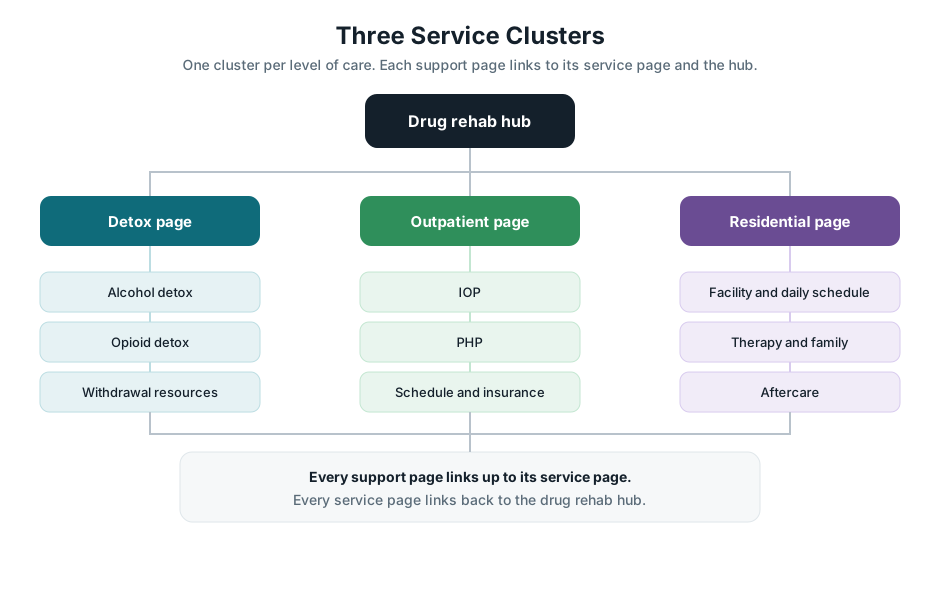
A drug rehab website should build one cluster for each service type.
Drug rehab hub
↓
Detox page
↓
Alcohol detox, opioid detox, withdrawal resources
Drug rehab hub
↓
Outpatient page
↓
IOP, PHP, schedule, insurance resources
Drug rehab hub
↓
Residential page
↓
Facility, daily schedule, therapy, family, aftercare resources
Each support page should link back to the matching service page. Each service page should link back to the main hub.
Answer For Rehab Owners
SEO strategies differ for detox, outpatient, and residential rehab because each service answers a different treatment decision. Detox SEO needs medical trust and urgent local access. Outpatient SEO needs schedule, eligibility, insurance, and location access. Residential rehab SEO needs facility proof, program structure, reviews, clinical team detail, and aftercare depth.
A single drug rehab SEO plan will miss these differences. Build separate pages, separate keyword groups, separate proof blocks, and separate conversion steps for each service level.
Frequently Asked Questions
Do detox and residential rehab need different SEO pages?
Yes. Detox and residential rehab need different SEO pages. Detox searches focus on withdrawal risk and urgent medical support. Residential searches focus on facility, daily structure, clinical team, family trust, and reputation.
Should outpatient, IOP, and PHP have separate pages?
Yes. Outpatient, IOP, and PHP should have separate pages when schedule, intensity, eligibility, or service detail differs. The addiction treatment continuum separates outpatient services from intensive outpatient and partial hospitalization levels.
Which rehab service page needs the most medical review?
Detox pages need the strongest medical review because withdrawal content can affect health and safety. Medication-assisted treatment, dual diagnosis, crisis, pregnancy, and adolescent pages also need strong clinical review.
Which service is most local for SEO?
Detox and outpatient pages carry strong local intent because people may need nearby access. Residential rehab can draw from a wider region, but facility proof, reviews, and location pages still support local trust.
Can one drug rehab page rank for detox, outpatient, and residential keywords?
One broad drug rehab page can work as a hub. Separate service pages should target detox, outpatient, residential, PHP, IOP, and dual diagnosis terms because each intent needs its own proof set.
Get Expert Advice
Professional consultation for your business needs. Connect with our experts today.