Why My Drug Rehab Website is Not Rankings After Publishing Content


A drug rehab website can fail to rank after publishing content for four main reasons. Weak YMYL trust, poor local SEO proof, weak reputation signals, and technical issues can stop Google from crawling, indexing, or serving the page.
Content alone does no ranking work until Google can find the page, store the page, match the page to a treatment query, and trust the source. Google Search works through crawling, indexing, and serving results, and Google gives no guarantee that any page will appear in Search.
YMYL Trust Is Too Weak
Drug rehab pages sit in a high-risk health category. Detox, withdrawal, medication-assisted treatment, dual diagnosis, pregnancy, adolescent treatment, and crisis pages need strong trust proof.
Google describes YMYL topics as areas that can affect health, safety, financial stability, welfare, or well-being. Google also states that its ranking systems seek helpful, reliable content made for people.
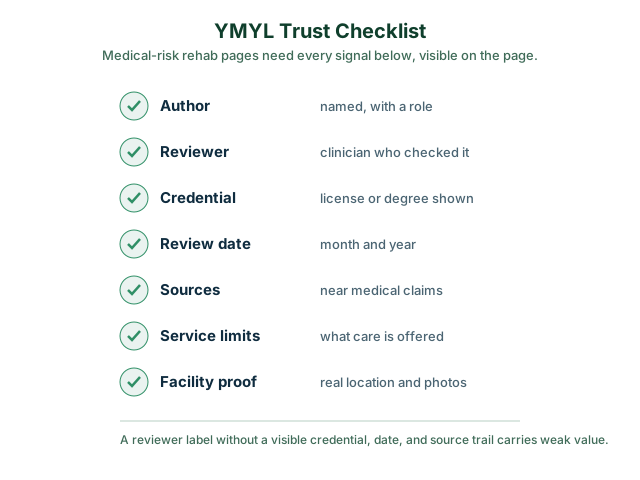
Use a review block on medical-risk pages.
Author: name androle
Reviewer: clinician name and credential
Review scope: medical accuracy, treatment terms, safety wording
Last review: month and year
Sources: near medical claims
A reviewer label has weak value without a visible credential, date, scope, and source trail. A strong review removes unsafe claims and supports medical wording.
Content Is Too Broad For Rehab Intent
A broad drug rehab page rarely serves every treatment need. Families search for a service, location, payment option, program level, or safety answer.
- alcohol detox → alcohol detox page
- opioid treatment → opioid treatment page
- medical detox → detox service page
- residential treatment → residential program page
- PHP → partial hospitalization page
- IOP → intensive outpatient page
- dual diagnosis → co-occurring disorders page
- insurance coverage → insurance page
- admissions → admissions process page
- local rehab search → facility location page
Each page should name the service, location, clinical team, service limits, privacy step, and next contact point. Keyword repetition cannot replace service proof, so lead with real rehab content optimization on each page.
Local SEO Proof Is Too Thin
Most rehab searches have local intent. People may search for detox near home, inpatient alcohol rehab near a city, or dual diagnosis treatment in a state.
Google local ranking uses relevance, distance, and prominence. Google notes that complete and accurate Business Profile data helps match a business with local searches.
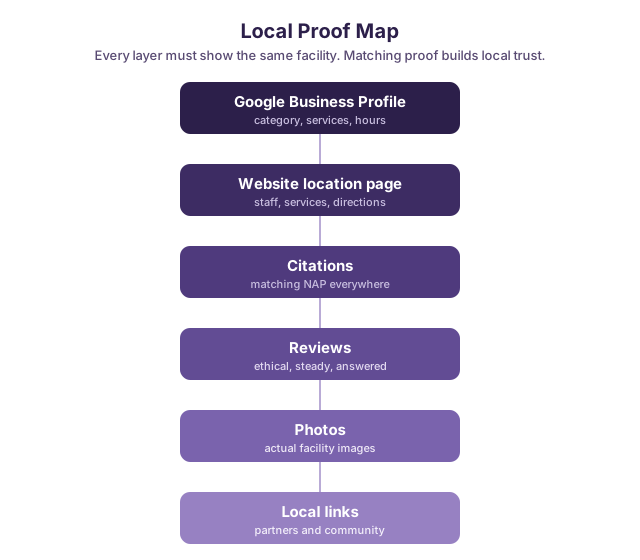
Name: Same facility name everywhere
Address: Same address on site, GBP, citations
Phone: Same main phone across profiles
Category: Accurate Google Business Profile category
Hours: Current public hours
Photos: Actual facility images
Reviews: Ethical review process
Citations: Matching NAP data
Location page: Staff, services, directions, photos
Copied city pages add weak local value. A true facility page proves place, service, staff, access, and trust.
Google Business Profile Does No Support Work
A rehab site can have useful pages and still lose local visibility when the Google Business Profile is thin or mismatched. The profile should match the website in name, address, phone, categories, services, photos, and website link.
- business name → homepage and footer
- address → location page
- phone → header and contact page
- category → service pages
- photos → location page media
- services → program pages
- reviews → reputation process
- website link → correct landing page
The website and profile should show the same facility. Mixed facts weaken local trust.
Reviews And Reputation Signals Are Missing
Competitive rehab searches need outside trust signals. Google local documentation links prominence with review count and rating.
- Google reviews local prominence
- Privacy-safe replies active profile management
- Accreditation profile outside review
- License source operating proof
- Clinician profiles staff identity
- Local partner mentions referral context
- Local news public presence
Families read reviews before they call. Search systems also read public reputation signals across the web.
Outside Authority Is Too Weak
A new rehab page can rank for brand terms and low-competition searches. Competitive terms need more public authority, which is where steady rehab link building matters.
Google uses links for crawl discovery and page relevance signals. Google spam policy also warns against link spam and scaled content abuse.
- state treatment association → category relevance
- accreditation profile → outside review
- clinician directory → staff proof
- hospital partner → referral context
- community nonprofit → local trust
- local news → public presence
- recovery resource page → topical relevance
Cheap guest posts and fake directories create risk. Useful mentions from credible sources build safer authority.
Content Looks Recycled Or Scaled
More pages can hurt when pages add little user value. Google defines scaled content abuse as many pages created mainly for rankings with little or no value for users, no matter how the pages were created.
- copied city pages → one facility page with local proof
- generic addiction articles → sourced article with reviewer
- duplicate program pages → service page tied to actual program
- FAQ pages made for keywords → answer blocks inside service pages
- AI summaries without facility detail → clinical and local proof content
Each page needs a unique treatment purpose, local proof, clinical proof, or buyer answer.
Technical SEO Blocks The Page
A rehab page cannot rank when Google cannot crawl, render, index, or serve the page. Check technical SEO before rewriting copy.
robots.txt block
Google may miss the page
noindex tag
page cannot enter index
wrong canonical
credit can move elsewhere
broken internal link
Google may miss the page
slow mobile page
users leave sooner
hidden main content
weak page understanding
server error
crawl and user issue
missing sitemap entry
weaker discovery support
Google crawling and indexing docs cover controls that affect how Google finds and parses content.
Internal Links Do No Support The New Page
A new page needs internal links from relevant pages. A published article with no links can sit outside the main site structure.
Google recommends crawlable links and descriptive anchor text. Internal links help Google and users find related pages.
- detox page → homepage, programs hub, admissions page
- alcohol detox article → detox page and reviewer bio
- residential page → programs hub and location page
- PHP page → outpatient hub and admissions page
- IOP page → outpatient hub and insurance page
- insurance page → all program pages
- location page → homepage, service pages, contact page
- reviewer bio → reviewed medical pages
Internal links should move readers from education to service, from service to admissions, and from medical claims to reviewer proof.
Pages Compete For The Same Query
Several pages can target the same rehab query. A service page, blog post, and city page may all chase the same term.
- two detox pages → choose one main detox page
- city page overlaps facility page → make facility page the local target
- blog competes with service page → narrow blog intent and link to service page
- admissions repeats insurance → split intake from payment questions
- dual diagnosis article competes with program page → make program page the service target
Every page needs one job. Service pages target admissions intent. Articles answer education intent and send readers to the matching service page.
Diagnosis Table For No Rankings
Use the table before publishing more content.
| Symptom | Likely cause | Next move |
|---|---|---|
| page missing from index | crawl or index issue | inspect URL and technical controls |
| indexed with no impressions | weak intent match or weak links | revise page focus and links |
| impressions with no clicks | title or snippet issue | improve title, meta, first answer |
| clicks with no calls | weak service proof | improve proof and contact step |
| calls with poor quality | wrong intent | adjust targeting and copy |
| page ranks then drops | trust or authority issue | add proof, sources, links, reviewer |
| many pages flat | scaled or recycled content | consolidate and rebuild hubs |
A technical problem needs technical work. A trust problem needs proof. A local problem needs local evidence.
Rehab Ranking Recovery Map
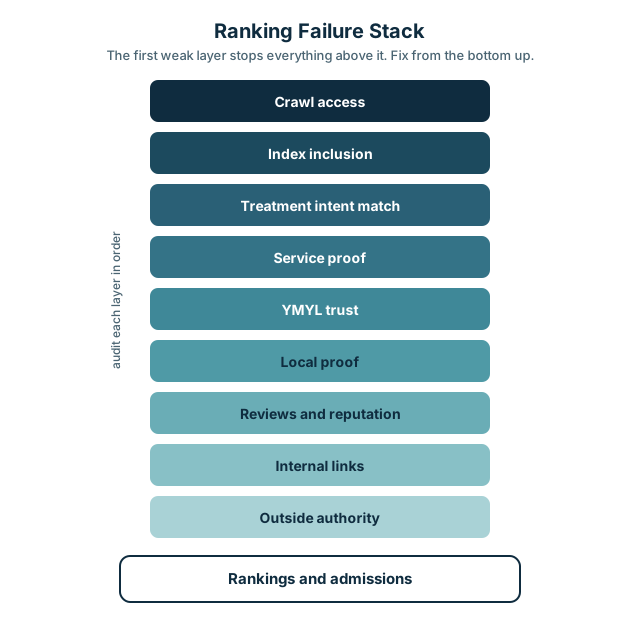
Crawl access
  ↓
Index inclusion
  ↓
Treatment intent match
  ↓
Service proof
  ↓
YMYL trust
  ↓
Local proof
  ↓
Reviews and reputation
  ↓
Internal links
  ↓
Outside authority
  ↓
Rankings and admissions
Use the map as a page audit. The first weak layer becomes the next work item.
Answer For Rehab Owners
Your drug rehab website may have no rankings after publishing content because one or more foundations are missing. Check crawl access, index inclusion, treatment intent, YMYL trust, medical review, local SEO proof, Google Business Profile data, reviews, internal links, and authority.
Start with Search Console. Confirm crawl and index status. Then match each page to one treatment intent, add clinical proof, strengthen local proof, clean duplicate content, build internal links, and earn credible mentions.
Frequently Asked Questions
Why is my drug rehab website not ranking after publishing content?
A drug rehab website may fail to rank because of crawl issues, indexing issues, weak YMYL trust, generic content, poor local SEO proof, thin reviews, weak internal links, page overlap, spammy links, or low authority.
Does rehab content need medical review to rank?
Google does no list medical review as a direct ranking switch. Medical review helps high-risk pages because detox, withdrawal, medication, and dual diagnosis content can affect health and safety. Strong E-E-A-T signals matter more for YMYL topics.
Are copied city pages bad for rehab SEO?
Copied city pages with swapped location names can create low value and scaled content risk when built mainly for rankings. Build facility pages with local proof, photos, services, staff, reviews, and citations.
Can poor Google Business Profile data hurt local rehab rankings?
Weak or inconsistent Google Business Profile data can reduce local trust. Google local ranking uses relevance, distance, and prominence, and complete business information helps Google match the profile with relevant searches.
What should I fix first if my rehab pages have no rankings?
Start with Search Console URL Inspection. Check crawl, index, canonical, sitemap, and mobile rendering. Then check treatment intent, service proof, medical review, local SEO proof, Google Business Profile data, internal links, duplicate content, reviews, and outside authority.
Get Expert Advice
Professional consultation for your business needs. Connect with our experts today.