Does Rehab Website Content Need A Clinician Author To Rank?

Google has no public rule that requires every rehab website page to have a clinician author. A rehab page can rank when it shows named authorship, expert review, accurate sources, facility proof, service detail, and strong trust signals.
The best model is a professional writer with a credentialed clinical reviewer. A writer can create the page structure, plain wording, service detail, SEO focus, and family-friendly flow. A clinician should review medical-risk content before publication.
Google documentation states that Search systems seek helpful, reliable content made for people. Google also states that E-E-A-T itself is no single ranking factor, yet its systems use factors that can identify strong experience, expertise, authoritativeness, and trust. YMYL topics receive greater E-E-A-T weight when health, safety, finances, welfare, or well-being may be affected.
What Rehab Owners Need To Know
A clinician does no need to write every page. Medical-risk pages need clinical review, visible credentials, source support, review dates, and editorial standards.
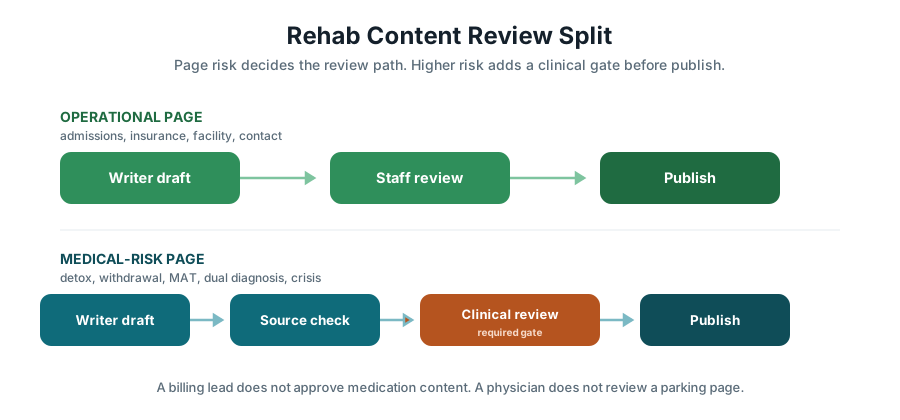
Use two review tracks.
Operational page: writer draft -> staff review -> publish

Medical-risk page: writer draft -> source check -> clinical review -> publish
Operational pages include admissions steps, packing lists, insurance verification, facility details, and contact pages. Medical-risk pages include detox, withdrawal, medication-assisted treatment, dual diagnosis, crisis content, pregnancy, adolescent treatment, and symptom pages.
A Writer Can Draft Rehab Content Safely
A professional writer can draft rehab content when the writer has approved source material. The writer should work from facility facts, program notes, admissions steps, insurance process, service limits, and approved clinical sources.
A writer can draft:
- Admissions pages
- Insurance pages
- Facility pages
- Location pages
- Family resource pages
- Staff bios
- Program overview pages
- Rehab SEO pages
The writer should flag medical claims before publication. The reviewer should check medical accuracy, safety wording, service limits, treatment terms, and source quality.
Clinical Review Belongs On Higher-Risk Pages
Clinical review belongs on pages that may influence a health or treatment decision. Rehab content in detox, withdrawal, medication, mental health, and crisis categories can affect safety.
Send these pages for clinical vetting:
- Alcohol detox
- Opioid detox
- Benzodiazepine withdrawal
- Medical detox
- Medication-assisted treatment
- Dual diagnosis
- Depression and substance use
- Anxiety and substance use
- Crisis intervention content
- Pregnancy and substance use
- Adolescent treatment
- Withdrawal symptoms
A clinician name alone has weak value. The page should show the reviewer, credential, review scope, review date, and sources near medical claims.
Match The Credential To The Claim
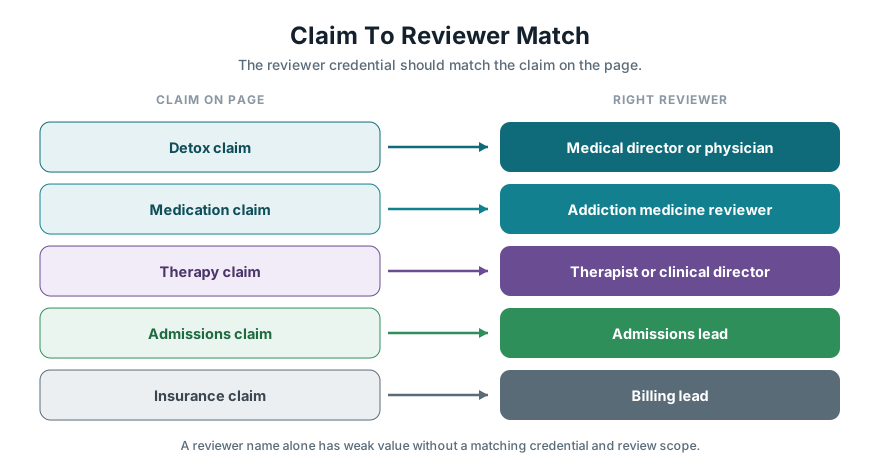
The reviewer should match the page topic. A physician or medical director fits detox, withdrawal, medication, and medical-risk pages. A therapist fits therapy, trauma, family systems, relapse prevention, and aftercare content.
Use this reviewer match:
- Detox and withdrawal: physician, medical director, addiction medicine reviewer
- Medication-assisted treatment: addiction medicine reviewer or medical director
- Dual diagnosis: qualified mental health reviewer
- Therapy and trauma: therapist or clinical director
- Aftercare: therapist, case manager, or clinical lead
- Admissions: admissions lead
- Insurance: billing lead
- Facility page: operations lead
A billing lead should no approve medication content. A physician does no need to approve a parking page.
Use Named Authorship And Medical Review Tags
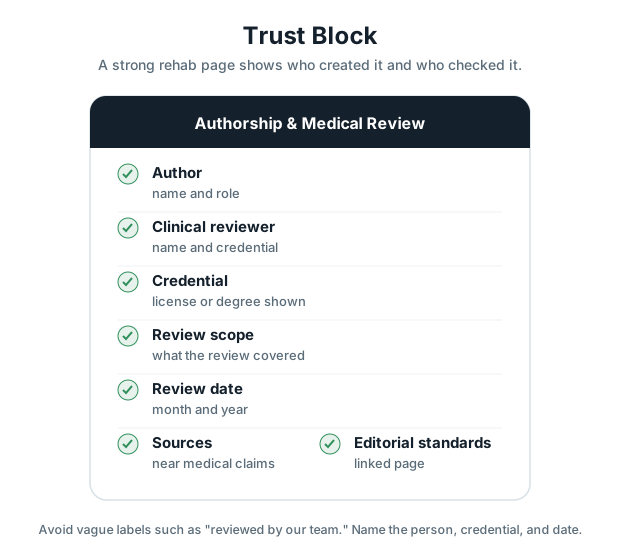
A rehab page should show who wrote the page, who reviewed it, and what the review covered. Place the tag near the article header or the first content block.
Use this format.
Author: name and role
Clinical reviewer: name and credential
Review scope: medical accuracy, treatment terms, safety wording
Last review: month and year
Sources: near medical claims
Editorial standards: linked page
Avoid vague labels such as reviewed by our team. That phrasing hides the person, credential, date, and scope.
Publish Editorial Standards
A rehab website should publish editorial standards. The page should show how clinical and non-clinical pages move from draft to source check, review, update, and correction.
Include:
- Who writes content
- Which topics need clinical review
- Which credentials review each topic type
- How sources get selected
- How facility facts get checked
- How updates get scheduled
- How corrections get handled
- How AI-assisted drafts receive human review
This page helps families, referral partners, Google Search, ChatGPT, and Google AI Overviews see a repeatable quality process.
Put Sources Near Medical Claims
Medical-risk claims need evidence near the claim. Bottom source lists can help, but readers need proof close to the medical statement.
Use trusted source types:
- SAMHSA
- NIDA
- ASAM
- CDC
- State health agencies
- Peer-reviewed research
- Facility license source
- Accreditation source
Source support should appear near claims about withdrawal risk, medication, dual diagnosis, crisis support, treatment level, safety, and outcomes.
Add Facility Experience To The Page
A rehab page should show the actual facility behind the content. Generic medical summaries do little for families or search systems.
Add facility detail:
- How admissions calls work
- Which services occur at which location
- What families can expect before intake
- What the treatment day includes
- Which team supports each program
- How insurance verification works
- How aftercare planning starts
- How privacy protects inquiries
Google generative AI guidance recommends valuable, unique, non-commodity content and warns against recycled content made mainly for search visibility.
AI-Assisted Drafting Needs Human Review
AI can help with outline planning, FAQ ideas, plain wording, source checklists, and first drafts. It should no publish medical advice without human review.
Use AI for:
- Outline planning
- FAQ discovery
- Content structure
- Plain wording
- Internal link ideas
- Source checklist creation
- Draft comparison
Avoid AI-only publication for detox risk, medication, diagnosis, crisis advice, treatment suitability, or patient safety content. Google states that AI-generated content has no special ranking advantage, and automation made mainly for ranking manipulation violates spam policies.
Use Schema To Label Authors And Reviewers
Schema should match visible page facts. It should label authority that readers can see.
Use:
- Article for resource pages
- MedicalWebPage for medical education pages
- Person for author and reviewer bios
- ProfilePage for bio pages
- Organization for the rehab brand
- Service for treatment program pages
- BreadcrumbList for page templates
Google states that structured data helps Search understand page content and entities. Google also states that structured data is no requirement for generative AI search, and no special schema.org markup is needed for AI Overviews or AI Mode.
AI Overviews Need The Same Trust System
Google AI Overviews and AI Mode use the same foundation as Google Search. A page needs index eligibility and snippet eligibility to appear as a supporting link.
For rehab AI visibility, include:
- Direct answer near the top
- Named author
- Named reviewer
- Credential detail
- Source-backed medical claims
- Facility proof
- Internal links
- Schema that matches visible text
- Editorial standards link
A clinician author alone does no create visibility. The page needs a full trust system.
Use This Approval Process Before Publishing
A rehab page should pass quality review before publication. The process should protect the reader first and support rankings second.
Draft page
  ↓
Check facility facts
  ↓
Flag medical claims
  ↓
Add sources
  ↓
Send medical-risk content for clinical review
  ↓
Add author and reviewer details
  ↓
Check internal links
  ↓
Publish
  ↓
Schedule next review
Do no publish until the author, reviewer, sources, service facts, and internal links match the page topic.
Answer For Rehab Owners
Rehab website content does no need every word written from a clinician to rank. It needs a professional writing process, clinical review for medical-risk pages, named authorship, medical review tags, source support, editorial standards, and facility proof.
Use skilled writers for readability, SEO structure, service detail, and family-friendly wording. Use credentialed reviewers for detox, withdrawal, medication, dual diagnosis, crisis, pregnancy, adolescent treatment, and symptom pages. That system protects readers, supports E-E-A-T, and gives search systems stronger proof.
Frequently Asked Questions
Does Google require rehab content to have a clinician author?
Google has no public rule requiring every rehab page to have a clinician author. Google focuses on helpful, reliable, people-first content and E-E-A-T signals where trust has high importance.
Can a copywriter create rehab SEO content?
Yes. A copywriter can draft rehab SEO content when the page uses accurate facility facts, approved sources, and clinical review for medical-risk claims. The page should show author name, reviewer proof, and source support.
Which rehab pages need clinical review?
Detox, withdrawal, medication-assisted treatment, dual diagnosis, crisis, pregnancy, adolescent treatment, and symptom pages need clinical review. Admissions, packing, insurance, location, and facility pages can use staff review when they avoid medical advice.
Can AI create rehab content?
AI can help draft, organize, and simplify content. Human review should verify medical claims, facility facts, source support, and service accuracy before publication. Google states AI content has no special ranking advantage and still needs helpful value.
What should a medical review tag include?
A medical review tag should show the author, clinical reviewer, credential, review scope, last review date, sources, and editorial standards link. Avoid vague team labels with no named person or date.
Get Expert Advice
Professional consultation for your business needs. Connect with our experts today.