Can a Rehab Website Rank on Google Without Backlinks?


Yes, a rehab website can rank on Google without active backlink building for branded, local, low-competition, and long-tail searches. High-intent rehab keywords need stronger outside proof, because Google uses links as one signal for discovering pages and measuring relevance. Google also uses many other ranking systems and signals, which makes backlinks one signal in drug rehab SEO, alongside many others. PageRank still remains part of Google’s core ranking systems, so links help, though as one input among many.
A new treatment center should avoid buying links before its own site can earn trust. Build accurate program pages, location pages, internal links, reviews, Google Business Profile strength, clinical review, and source-backed medical content first. Then build outside authority through legitimate mentions, partnerships, citations, and resources worth referencing.
The Ranking Zone Decides The Backlink Need
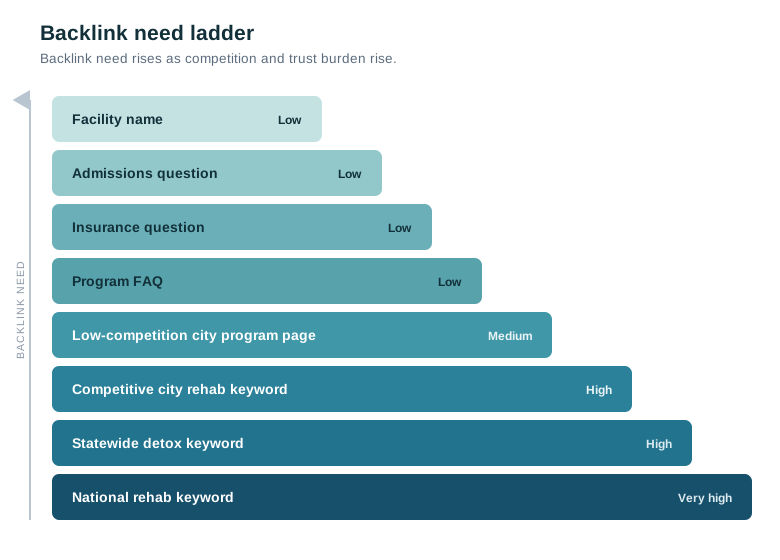
A rehab website can rank without backlinks when the query has low competition and strong site match. Brand searches, facility searches, admissions questions, insurance questions, staff bios, and local long-tail pages can win from relevance, local proof, and internal linking.
Competitive rehab searches need more proof. “Detox center in Miami,” “alcohol rehab Los Angeles,” and “best rehab center in California” bring stronger competitors, more directories, more local profiles, and more reputation signals. A page can be well written and still lack enough outside authority.
| Search type | Backlink need | Main ranking lever |
|---|---|---|
| Facility name | Low | Entity match |
| Admissions question | Low | Direct answer and site structure |
| Insurance question | Low | Page relevance |
| Staff bio | Low | Named person and credential match |
| Low-competition city program page | Medium | GBP, location proof, internal links |
| Detox center [CITY NAME] | High | Clinical trust and outside proof |
| Statewide rehab keyword | High | Brand authority and reputation |
| National rehab topic | Very high | Topical authority and citations |
Start With Pages That Can Rank Without Link Building
A rehab site should first publish the pages that can rank from accuracy and intent match. These pages also support later link building, because partners and AI systems need a stable source to reference.
Build these first:
| Page | Why it can rank early |
|---|---|
| Homepage | Brand and entity match |
| Location page | Address, GBP, local relevance |
| Admissions page | Specific decision intent |
| Insurance page | Facility-specific payment intent |
| Program pages | Service match |
| Staff bios | Named expertise |
| Family resource page | Long-tail concern |
| Program FAQ | Direct answer coverage |
Each page needs internal links from the homepage, service pages, and related resources. Google’s own systems understand how pages link to each other to work out what a page is about, so descriptive internal links and anchor text help Google find and make sense of your content.
Fix Internal Links Before Paying For Outreach
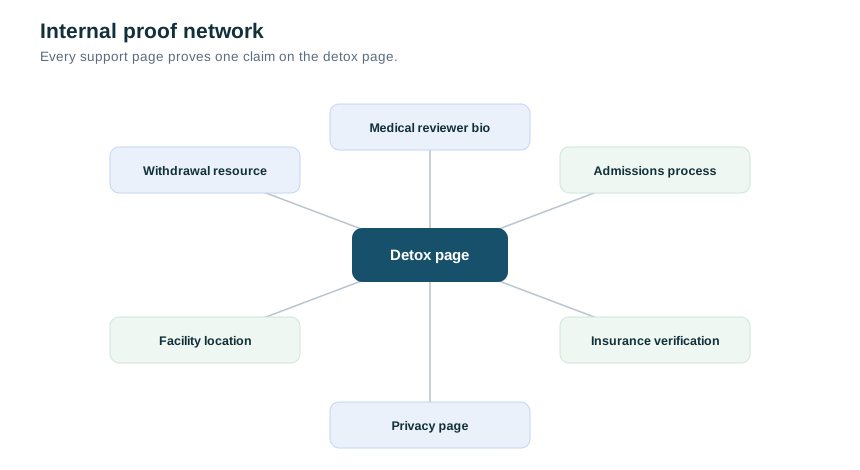
Many rehab websites chase backlinks while their own pages remain isolated. That wastes budget. A detox page, residential page, or dual diagnosis page needs a proof network inside the site before outside outreach begins.
A detox page should link to the medical reviewer bio, facility location, admissions process, insurance verification, alcohol withdrawal resource, opioid withdrawal resource, and privacy page. A location page should link to program pages, staff bios, directions, facility photos, admissions, and Google Business Profile support content. Get the website architecture right first, and every future backlink lands on a page that already deserves it.
Local SEO Can Work Before Backlinks
Local rehab SEO depends on more than backlinks. Google states that local results are based primarily on relevance, distance, and prominence. Prominence is partly about how many websites link to your business and how many reviews you have, so reviews and mentions can lift local ranking even before a formal link campaign.
A rehab center can gain local visibility from strong local proof. The site should match the Google Business Profile name, address, phone, categories, hours, photos, and service details. The location page should show facility-specific services, not copied city text.
| Local signal | Rehab SEO use |
|---|---|
| Verified GBP | Confirms facility identity |
| Accurate address | Supports Maps trust |
| Reviews | Support prominence |
| Review replies | Show active management |
| Facility photos | Confirm location proof |
| Local citations | Reinforce NAP consistency |
| Location page | Adds organic page support |
| Service pages | Connect treatment terms |
Backlinks help local SEO when competitors have equal or stronger local proof. Until then, fix GBP, reviews, location pages, and citations first.
Bad Backlinks Hurt Rehab SEO Trust
A rehab center should avoid link packages built only for ranking reports. Google’s link spam policy covers links created mainly to manipulate rankings, including paid links that pass ranking credit, excessive link exchanges, automated links, low-quality directory links, and keyword-rich guest post links. Google confirms that buying and selling links is normal for advertising, as long as those links carry a rel="sponsored" or rel="nofollow" attribute so they do not pass ranking credit.
Google enforces the rule firmly. Its link-spam system, nicknamed Penguin, folded directly into the core ranking systems back in 2016, so the core algorithm catches link manipulation directly. Rehab is a sensitive category. A treatment center should never attach its brand to fake blogs, link networks, spun guest posts, comment links, or irrelevant directories. Those links add risk and do little for family trust, clinical trust, or local proof.
Good Backlinks Look Like Proof
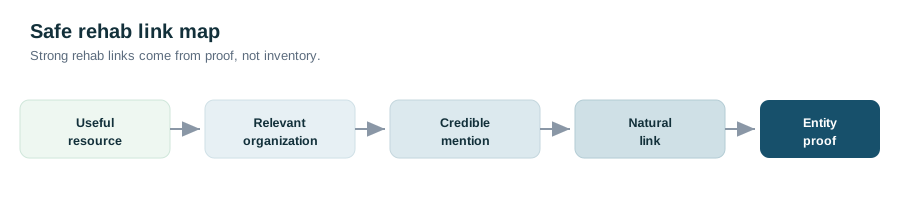
Good rehab backlinks come from actual relationships, useful resources, and credible local presence. They make sense even if Google never counted them.
| Link source | Why it helps |
|---|---|
| Local hospital partner | Confirms community referral context |
| State treatment association | Supports treatment category relevance |
| Mental health nonprofit | Supports related service proof |
| Local news article | Confirms public presence |
| Chamber profile | Confirms local business identity |
| Clinician profile | Connects staff credentials |
| Community event page | Confirms local activity |
| Recovery resource page | Supports public usefulness |
Use natural anchors. Facility names, resource titles, event names, staff names, and organization names look safer than keyword-heavy anchors. That kind of rehab link building earns authority that survives Google’s spam updates.
Build Link Assets, Not Link Orders
A rehab website earns better mentions when it publishes assets people can reference. Generic service pages rarely attract organic mentions. Useful resources have a better chance.
Create assets such as:
- Family admissions checklist
- Insurance verification checklist
- Level-of-care comparison chart
- Detox safety resource
- Local recovery resource page
- Clinician-reviewed FAQ
- Discharge planning resource
- Event or continuing education page
- Alumni support resource
- Compliant case story with consent
Each asset should link back to the matching service page. A detox safety resource should support the detox page. A level-of-care chart should support residential, PHP, IOP, and outpatient pages. Strong rehab content is what makes these assets worth referencing in the first place.
When Backlinks Become The Bottleneck
Backlinks become a bottleneck when the page already has strong fundamentals. If the page has thin service copy, weak reviewer proof, poor internal links, bad GBP data, or no reviews, outreach will not fix the main issue.
Move to link building after these items pass:
| Requirement | Pass condition |
|---|---|
| Service page accuracy | Page matches actual services |
| Location proof | Address, photos, staff, and programs match |
| Clinical review | Reviewer matches medical claim risk |
| Internal links | Service pages connect to proof pages |
| GBP | Accurate and maintained |
| Reviews | Active review process exists |
| Sources | Medical claims have support |
| Privacy | Forms and policy are visible |
| Schema | Markup matches visible content |
A page with weak trust needs repair before outreach. A strong page in a crowded market needs authority. A drug rehab SEO audit tells you which one you are looking at.
The No-Backlink Launch Plan
A rehab site can launch without paid link building if the first phase targets reachable searches. The goal is to rank pages that match actual services, brand terms, location facts, and long-tail questions. A backlink phase then fits into your wider drug rehab SEO strategy.
Phase 1: Publish The Core Pages
Build the homepage, location pages, program pages, admissions page, insurance page, staff bios, privacy page, clinical review process, and family resources. Link them together with descriptive anchors.
Phase 2: Strengthen Local Proof
Update GBP, photos, hours, categories, citations, review replies, location details, parking notes, and service descriptions. Match every local signal across website and profile.
Phase 3: Publish Reference Assets
Add resources that partners, families, and clinicians may reference. Start with admissions, insurance, detox safety, level-of-care comparison, and family call preparation.
Phase 4: Earn Mentions
Reach out only where a relationship or useful resource already exists. Avoid link volume goals. Track relevance, source quality, referral value, and trust value.
Answer For Rehab Owners
A rehab website can rank without backlinks for the right searches. Brand, admissions, insurance, staff, facility, local long-tail, and program FAQ pages can gain visibility before outreach begins.
Competitive rehab terms need more outside proof. Backlinks help most when they come from credible sources and support an already strong page. Buy weak links first, and the site spends money before it earns trust, and risks a spam-policy problem on a sensitive category.
FAQ
Can a new rehab website rank without backlinks?
Yes, a new rehab website can rank for branded searches, facility pages, admissions questions, insurance questions, staff bios, and some low-competition local pages without active backlink building. Competitive detox, rehab, and dual diagnosis terms need stronger outside proof.
Are backlinks still useful for rehab SEO?
Yes, backlinks can help rehab SEO when they come from credible, relevant sources. Google uses links as one signal for relevance and page discovery, while many other ranking systems also affect results.
Should a rehab center buy backlinks?
A rehab center should avoid paid links built to manipulate rankings. Google’s link spam policy covers paid ranking links and other link schemes, unless advertising or sponsorship links use the proper rel="sponsored" or rel="nofollow" qualification.
What should a rehab site fix before link building?
Fix program pages, location pages, internal links, Google Business Profile, reviews, clinical review, source-backed medical content, privacy pages, and schema before outreach. Link building works better when the page already deserves trust.
Which backlinks help rehab websites most?
Relevant mentions from hospitals, clinician directories, mental health organizations, treatment associations, local news, chambers, community partners, and useful resource pages help more than generic guest posts or low-quality directories.
Get Expert Advice
Professional consultation for your business needs. Connect with our experts today.