How Google AI Overviews Affect SEO: Traffic, Rankings, and How to Adapt


A page may maintain strong rankings yet experience a decline in search traffic. This challenge arises with Google AI Overviews, as users now see a summarized answer before selecting a website.
Google AI Overviews impact SEO by reducing clicks for certain queries, causing even top-ranking pages to lose click-through rate. Brands must now ensure their content is included as a source within AI answers. Google Search Central links generative AI features with core Search ranking systems, maintaining the importance of SEO for crawl access, content quality, and visibility.
SEO now extends beyond rankings and content updates. Factors such as crawlability, strong organic positions, valuable content, supporting evidence, and entity trust are increasingly important. Reporting should also include more than click data alone.
Takeaways
- AI Overviews can reduce organic clicks.
- Top rankings may lose CTR.
- SEO still supports AI search visibility.
- Generic informational content carries a higher risk.
- Original evidence improves source potential.
- Entity trust affects brand visibility.
- GEO works best with strong SEO fundamentals.
- Track citations, mentions, CTR, and conversions.
What is Google AI Overview?
A Google AI Overview is an AI-generated summary in Google Search. It can appear above classic organic results and answer part of a query inside Google.
This feature may display source links near the summary. Google documents query fan-out for both AI Overviews and AI Mode, allowing search to explore related subtopics and data sources. For SEO, source visibility becomes especially important when clicks decline.
For example, a search on how AI Overviews affect SEO may return a broad summary covering traffic loss, CTR impact, rankings, and adaptation strategies. Users often read this summary before selecting a source.
What Google Says About AI Overviews and SEO
Google Search Central presents AI Overviews as part of Search. Its documentation connects generative AI features with core Search ranking systems. That links AI visibility with crawl access, content quality, and page experience. AI Overview optimization works best as stronger SEO work, not a loophole.
- Access: Important pages need index eligibility.
- Quality: Content needs useful information and strong proof.
- Experience: Pages need strong usability.
- Coverage: Query fan-out rewards related-topic depth.
- Trust: Brand, author, and source signals support confidence.
How AI Overviews Change Search Behavior
AI Overviews present part of the answer directly on the results page, allowing users to review a summary before visiting any website. This reduces attention given to organic listings.
Search queries have become broader, often encompassing definitions, risks, comparisons, and next steps. Google documents query fan-out across subtopics for AI features. Depth of topic coverage is now more valuable than keyword repetition, so content should address the entire search journey.
This shift alters the initial moment of trust, as users may encounter key ideas within Google before visiting a website. If the summary cites a competitor, your influence may decrease before a user clicks through.
For example, when a user searches how Google AI Overviews affect SEO, they might have previously opened several articles. With an AI summary, the answer appears first, and users are more likely to click only if the source provides additional value or deeper evidence.
How AI Overviews Affect Organic Traffic
Organic traffic relies on user attention and motivation to click. AI Overviews may answer part of a query before users visit a site, increasing risk for pages focused on basic informational content. The main concern arises when rankings remain stable but CTR declines.
Rise of Zero-Click Searches
Zero-click searches increase when Google fully satisfies the query, a trend made more common by AI summaries. Pew data indicates lower click rates when summaries are present.
Pew Research Center found users clicked traditional search results in 8% of visits with an AI summary. Users clicked traditional results in 15% of visits without an AI summary. Links within AI summaries accounted for about 1% of visits.
Not all visits will disappear; those that remain may reflect deeper user intent. Pages offering only basic definitions are most vulnerable, while in-depth assets continue to attract users seeking proof. Enhance pages that simply repeat widely available information.
A glossary page may lose clicks, while a benchmark report can still earn visits.
Declining CTR for Top Positions
Holding the top organic position no longer guarantees initial user attention, as the AI answer may appear before the organic link.
This creates challenges in reporting, as rankings may remain steady while click share declines. Broader search usage can increase impressions, but traffic teams may observe fewer qualified sessions from the same query group.
Ahrefs updated its AI Overview click study after reviewing December 2025 data. The updated article reports a 58% lower average CTR for the top-ranking page when AI Overviews appear.
Data point: Pew found 8% of traditional results clicks with AI summaries. The figure reached 15% when no AI summary appeared.
Monitor CTR by SERP type before adjusting your page strategy.
How AI Overviews Affect Rankings
Rankings continue to underpin AI search visibility, as Google still requires crawlable, indexable, high-quality pages. However, AI answers may capture user attention after ranking, so a page can rank well yet lose clicks, while another gains source visibility despite lower traffic.
| Organic ranking | Position, impressions, ranking page |
|---|---|
| AI Overview presence | Queries showing AI summaries |
| Source inclusion | Pages cited or linked in AI answers |
| Brand mention | How the answer describes the brand |
| Business outcome | Leads, sales, demos, assisted conversions |
How to Adapt Your SEO Strategy for AI Overviews
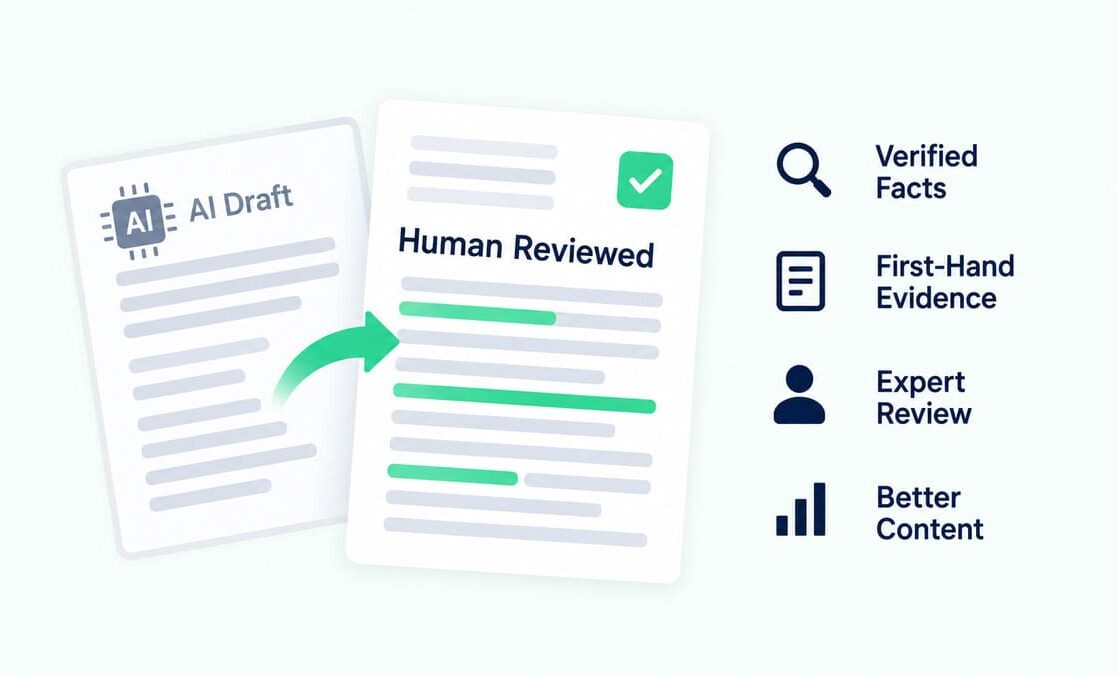
AIO SEO favors pages that serve both readers and retrieval systems. Direct answers, robust evidence, and strong entity signals are increasingly important. Generic content loses value in competitive areas. Durable content should include verified facts, clear structure, author credibility, and unique assets. Effective adaptation aligns content quality, technical accessibility, and AI answer visibility.
When evaluating a page for AI Overviews CTR impact, note that a weak page simply repeats public definitions. A stronger page includes CTR data, study dates, query examples, source notes, and comparison tables, offering more for Google to cite and for readers to trust.
Answer the Main Query Early
Begin by addressing the main search task before providing background. For an article on AI Overviews, mention traffic, rankings, and adaptation strategies early. Avoid lengthy historical context. Capture attention immediately to encourage continued reading. A strong opening also aids answer extraction.
Google AI Overviews affect SEO by driving lower click volume, weaker CTR, and reduced visibility from new sources.
Focus on Question-Based Queries
AI search extends beyond single keywords, connecting related questions within the same topic. This approach rewards pages that provide comprehensive coverage of the search journey.
Organizing content into question clusters helps avoid thin keyword targeting. Each question should address a distinct reader need. Avoid repeating answers, and link to more detailed pages when additional depth is required.
- How do AI Overviews affect organic traffic?
- Do AI Overviews reduce CTR?
- Do rankings still matter?
- Which content loses clicks?
- How should teams track AI visibility?
Add Evidence Google Can Trust
Support claims about AI Overviews with credible evidence. Reference Google for official documentation, Pew for user click behavior, and Semrush for intent trends. Include internal data only when examples are valid. Place source notes near significant claims to strengthen credibility.
- Statistics from reliable studies
- Methodology notes
- Original benchmark data
- Expert commentary
- Case examples
- Comparison tables
- Updated source dates
Semrush reported increased AI Overview coverage for commercial, transactional, and navigational queries in 2025. This indicates that the SEO impact of AI Overviews now extends beyond purely informational content.
Prioritize E-E-A-T
E-E-A-T principles should be evident throughout the article. Include author credentials at the beginning or end, cite sources near key claims, and display recent updates when the topic evolves.
AI SEO experts should review sensitive claims prior to publication. Include reviewer notes for strategy, analytics, or budget guidance. Strong trust signals make content more defensible.
| Author | Proves expertise |
|---|---|
| Reviewer | Supports accuracy |
| Organization | Connects content to brand |
| Source | Supports claims |
| Methodology | Shows how data was gathered |
Create Assets Worth Citing
AI search favors content with reference value. Generic articles compete with many similar pieces, while studies, calculators, or benchmarks offer stronger citation potential. Add at least one unique asset to major topic clusters, such as an AI Overview traffic risk matrix.
- AI Overview traffic risk matrix
- AIO visibility checklist
- CTR tracking dashboard
- Query fan-out map
- Source inclusion tracker
- AI Overview content refresh template
Improve Page Structure
Effective page structure enables users to quickly find value and helps search systems distinguish answers from supporting details. Poor structure can obscure valuable information.
- H1 matches search intent.
- H2 map to reader tasks.
- H3 appears only when depth helps.
- Statistics appear near claims.
- Tables support comparison or measurement.
- Internal links expand topic coverage.
- FAQ answers target long-tail questions.
Use Schema
The schema should describe content already visible on the page. Use the Article schema for the blog post. Use BreadcrumbList for navigation. Use the FAQpage only when the FAQ content appears on the page.
Avoid using markup that exaggerates the content. Product and Review schema should match visible details. While schema clarifies meaning, evidence is essential for building trust.
SEO Metrics to Track After AI Overviews
SEO reporting should extend beyond rankings and traffic, as AI Overviews can influence users before they click. Metrics must capture search visibility, source usage, and brand demand, linking SERP behavior to business outcomes.
- AI Overview presence: Queries where an AI summary appears.
- Source inclusion: Pages cited or linked inside AI answers.
- Brand mention share: How much AI mentions the brand.
- CTR with and without AI Overviews: Click performance split per SERP type.
- Search journey coverage: Coverage across main, related, comparison, and validation queries.
- Source sentiment: How AI answers describe the brand.
- Assisted conversions: Leads or sales influenced before the final visit.
- Branded search lift: Demand increases after exposure to AI answers.
No single metric fully captures the impact of AI search. AIO visibility may rise even as clicks decline. Evaluate traffic, source presence, and conversions collectively.
90 Day SEO Plan for AI Overviews
A 90-day plan should begin with evidence-based analysis rather than reactive changes. Identify where AI Overviews already impact traffic, then enhance pages with the highest search value. Each phase should reduce uncertainty and strengthen source material.
Days 1 to 15: Audit Search Exposure
The first phase is diagnostic. Start with pages that already bring search value. Compare rankings, impressions, clicks, and CTR. Check which priority queries show AI Overviews. Record sources appearing inside the answer.
- Top 100 organic pages
- Top query groups
- CTR movement
- AIO presence
- Competitor source inclusion
- Brand mention status
- Query intent
- Conversion value
Days 16 to 35: Upgrade Vulnerable Pages
The second phase focuses on protecting pages already under pressure. Prioritize those with strong impressions, stable rankings, and declining CTR, as these pages have search demand but may lose clicks to AI summaries.
Place the direct answer near the top of the page, and provide depth that an AI summary cannot fully replicate. Use examples, screenshots, data points, and decision criteria. Eliminate redundant claims and ensure each section serves a distinct purpose.
Days 36 to 60: Publish Citation Worthy Assets
The third phase involves creating reference-worthy material. Benchmarks, calculators, case studies, or comparison frameworks can attract more engaged visitors and provide AI answers with superior source material compared to generic articles.
Build 1 primary asset first: AI Overview traffic risk matrix. Support it with a query fan-out map, a source tracker, a CTR template, and an FAQ cluster.
Days 61 to 90: Measure, Improve, Repeat
The final phase establishes a measurement cycle. Compare outcomes to the initial audit, reviewing source inclusion, CTR, brand mentions, and competitor presence. Use consistent query groups for accurate reporting.
Continue refining pages by adding missing evidence, stronger examples, or improved internal links. Transform each cycle into a repeatable workflow.
Review AIO visibility every 30 days for priority query groups.
Common Mistakes to Avoid
AI Overview: SEO efforts can falter when teams pursue shortcuts rather than building lasting search value. The most effective approach is to enhance pages that users trust and that search systems can interpret. Common mistakes can undermine rankings, source inclusion, and business reporting.
- Chasing AIO hacks: Manipulative AI search tactics can create spam and pose a reputational risk.
- Measuring rankings alone: Rankings can hold while CTR and source visibility fall.
- Publishing generic AI content: Thin summaries add little value as references.
- Ignoring commercial queries: Semrush found AIOs expanded beyond informational searches into commercial, transactional, and navigational intent.
- Treating schema as a shortcut: Markup should match visible content.
- Skipping entity work: Brands need consistent signals from the company, author, product, and reputation.
- Forgetting conversions: Fewer visits can still produce stronger qualified demand.
Google documentation warns that scaled AI content without added user value may violate spam policy. GEO should build trustworthy visibility, not recommendation manipulation.
Frequently Asked Questions
Do Google AI Overviews reduce SEO traffic?
Yes, Google AI Overviews can reduce SEO traffic when the summary satisfies the query before a click. Pew found lower link clicking when AI summaries appeared. Informational pages carry the highest risk because many answer basic questions directly.
Do rankings still matter with AI Overviews?
Yes, rankings still matter because Google AI features use Search systems. Strong rankings can support visibility, trust, and source eligibility. The problem is that rankings no longer show the full search outcome.
Can you optimize for Google AI Overviews?
Yes, but the work should improve SEO quality first. Make content crawlable, useful, accurate, and easy to interpret. Add evidence, answer the main query early, and track source inclusion beside rankings and clicks.
What content is most at risk from AI Overviews?
Generic informational content carries the highest risk. Basic definitions, thin how-to posts, and weak listicles can lose clicks when AI summaries answer the query. Pages without original proof give readers fewer reasons to continue.
What content can perform better after AI Overviews?
Original research, expert analysis, case studies, benchmarks, tools, and comparison frameworks can perform better. These assets add value beyond a short AI answer. They also create stronger source material for AI search.
How should SEO teams measure the impact of AI Overview?
Track rankings, clicks, CTR, AI Overview presence, source inclusion, and brand mentions together. Compare queries with AI Overviews against similar queries without them. Add assisted conversions and branded search lift to capture delayed value.
Resources
- https://developers.google.com/search/docs/fundamentals/ai-optimization-guide
- https://developers.google.com/search/docs/appearance/ai-features
- https://www.pewresearch.org/short-reads/2025/07/22/google-users-are-less-likely-to-click-on-links-when-an-ai-summary-appears-in-the-results/
- https://ahrefs.com/blog/ai-overviews-reduce-clicks-update/
- https://www.semrush.com/blog/semrush-ai-overviews-study/
- https://developers.google.com/search/docs/fundamentals/using-gen-ai-content
- https://developers.google.com/search/docs/appearance/snippet