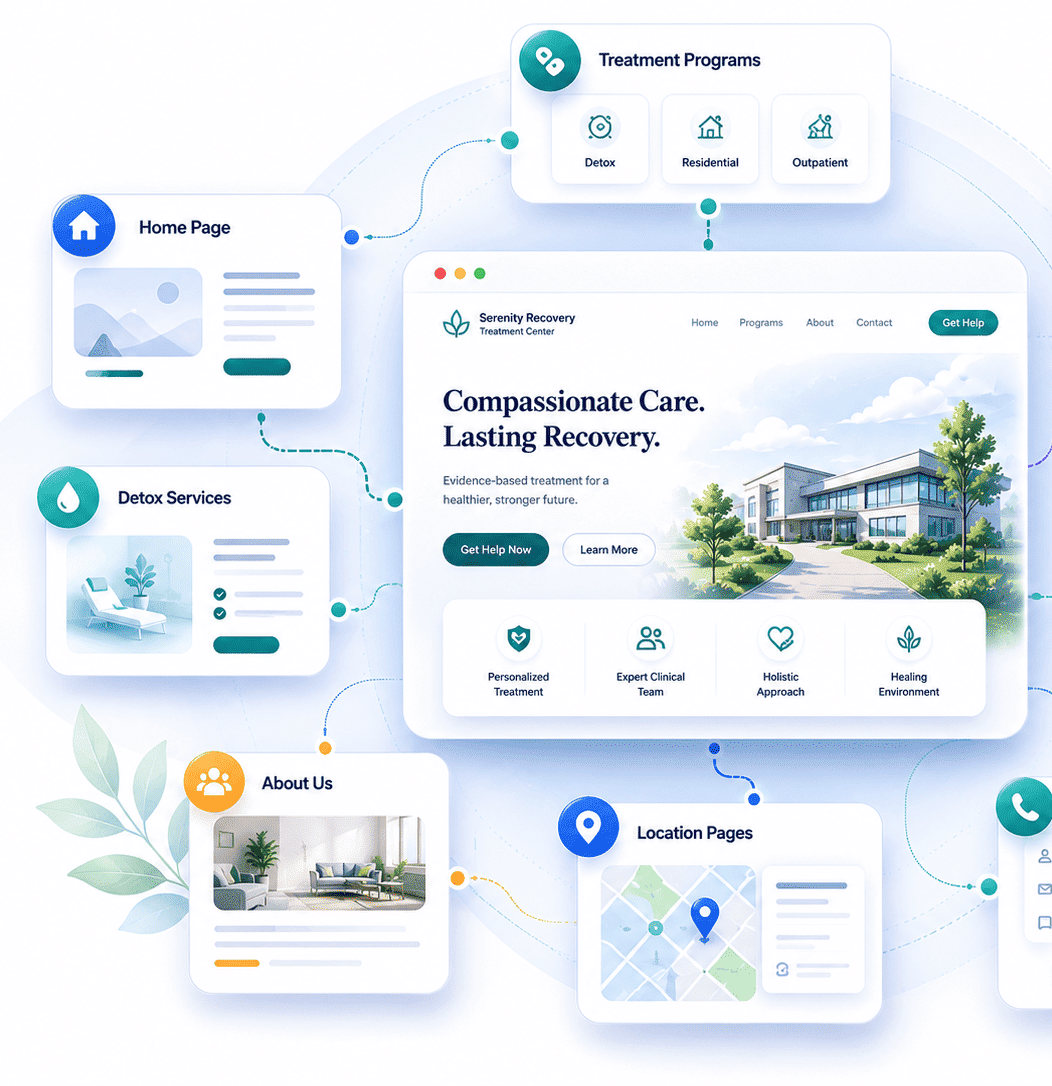
Your treatment center loses inquiries when pages, ads, Google profiles, and tracking do not support the same admissions goal. At IMMWIT, we review search, ads, profiles, pages, and tracking as a drug rehab marketing agency for addiction treatment centers. Our team organizes the work around your programs, locations, and contact points. Request a drug rehab marketing review before more inquiries drop.
Trusted by over 100+ companies worldwide
Traffic only helps when visitors call, submit a form, check insurance, or ask about treatment. Your admissions team needs contacts tied to treatment interest, not a pile of clicks. Visits alone do not show which calls, forms, or insurance checks deserve review.
Our team connects pages, campaigns, calls, forms, and source records. We check which pages bring inquiries, which campaigns create poor-fit contacts, and which sources need more work.
Focus on the actions admissions can use:
Rehab marketing needs separate research because treatment inquiries depend on program type, location, insurance, timing, and trust. Parents compare treatment centers for children, spouses, and family members. Many first contacts start after someone reads about detox, IOP, insurance, or locations. A rehab marketing agency must account for those details before building pages, ads, or local profiles.
A general healthcare agency can treat every form as the same lead. Addiction treatment marketing needs the program, source, location, and inquiry type behind the contact. A family support form differs from a detox call. A Google Maps call differs from a paid search click for residential treatment.
Ad policies make addiction treatment marketing different from most healthcare campaigns. Google restricts the promotion of recovery-oriented drug and alcohol addiction services. Meta requires U.S. drug and alcohol addiction treatment advertisers to have LegitScript certification and Meta permission.
Drug rehab SEO improves organic search visibility for treatment center pages. It includes rankings, technical fixes, page structure, content updates, internal links, and organic search growth.
Drug rehab marketing connects search visibility, ads, local profiles, pages, and tracking to admissions inquiries. It includes SEO, paid search, Google Business Profile, local search, content, landing pages, call tracking, form tracking, and admissions reporting. Drug rehab online marketing shows which pages and campaigns produce calls, forms, and insurance checks.
| Area | Drug Rehab SEO | Drug Rehab Marketing |
|---|---|---|
| Main role | Improve organic search visibility | Connect channels to admissions inquiries |
| Channels | Organic search, content, technical SEO | SEO, ads, Google Business Profile, pages, tracking |
| Page focus | Program pages, location pages, content updates | Landing pages, service pages, paid search pages |
| Tracking | Rankings and organic traffic | Calls, forms, source data, admissions reports |
| Best for | Organic search growth | Calls, forms, and admissions reporting |
Our team reviews the channels people use before contacting an addiction treatment center. We check search visibility, local profiles, paid campaigns, website pages, content, and inquiry tracking.
Missed organic searches can cost your center qualified inquiries. Rehab SEO improves how your treatment center appears for program, location, and admissions searches. We research keywords, update pages, improve internal links, and fix technical issues that limit organic reach.
Local SEO keeps your service areas, cities, counties, and location pages aligned. We update location content, citations, and local search details so nearby people can find accurate facility information. This work also supports calls from people near your locations.
Google Business Profile optimization improves how your facility appears in Google Maps. We review services, categories, phone numbers, photos, hours, and profile details. We compare the profile against the website and location pages. A cleaner profile helps nearby people call the right location.
Paid search reaches people looking for treatment options, insurance help, or program availability. We build campaigns around programs, locations, insurance intent, and call actions. We review keywords, ad copy, landing pages, and tracking before sending people to a page. Google restricts recovery-oriented drug and alcohol addiction services ads, so paid campaigns need policy review before launch.
Link building adds authority signals for rehab SEO through local citations, relevant websites, treatment resources, and community mentions. We look for links that match your service area, treatment topics, and website quality.
Treatment center content answers the questions people ask before contacting admissions. We write and improve pages for programs, insurance, family concerns, admissions steps, and common treatment questions. Each page directs visitors to a phone call, a form, an insurance check, or an admissions page.
Website page updates fix pages with thin copy, weak headings, missing program details, or poor contact options. We review page structure, internal links, trust sections, and calls to action. We update the parts that block reading, navigation, trust, or contact.
Paid campaigns need pages built for one decision. We create landing pages for programs, locations, insurance checks, and assessment requests. Each page has one main job, such as getting a call or form submission. The page must match the ad, keyword, and treatment service.
Each treatment program attracts a different type of inquiry. Detox, residential treatment, PHP, IOP, outpatient care, MAT, dual diagnosis, alcohol rehab, and drug rehab each need different page copy, ad angles, and contact options. Our team maps the program to the page, campaign, and next contact point.
Location changes the page, ad, and local search plan. A single-location center needs city and service-area details on the right pages. A multi-location center needs pages and campaigns that match each facility, county, state, and inquiry target.
Example campaign mapping:
Inquiries drop when pages, campaigns, tracking, or admissions follow-up break down. Some ads send people to pages that do not answer the program question. Some forms collect inquiries without showing the campaign source. Some reports show spend, clicks, and traffic, but don’t indicate which inquiries admissions can use.
Common problems include:
Addiction treatment ads create risk when copy, call routing, or facility identity mislead people.
Lead generation for rehab centers should create contacts that admissions can review. Our team reviews calls, forms, insurance verification requests, assessment requests, family inquiries, referral inquiries, and inquiry quality. Rehab lead generation is stronger when each inquiry maps to a program, page, campaign, or location.
Useful inquiry types include:
Treatment centers should exercise caution when using third-party lead sources. A safer lead plan builds direct inquiry channels through SEO, paid search, local search, content, landing pages, and source tracking. LegitScript states that lead generators and sober living homes are not currently eligible for its Addiction Treatment Certification Program.
Paid search for rehab centers reaches people seeking treatment options, insurance assistance, or program availability. Our team builds Google Ads and Microsoft Ads campaigns, then reviews call campaigns, ad copy, and landing pages. The search term, page, phone number, and form need to match.
Campaigns separate program, location, insurance, and admissions intent. A detox campaign sends people to a detox page, not a general homepage. An IOP campaign needs details about schedule, location, insurance, and call or form options. Drug rehab PPC also needs negative keywords, call tracking, form tracking, and page source reporting. Paid search in addiction treatment needs policy review. Google restricts ads for recovery-oriented drug and alcohol addiction services.
Google Business Profile optimization and local search put your facility details in front of people looking nearby. Local search activity includes phone calls, map views, directions, reviews, and website visits. For many treatment centers, Google Maps becomes the first call source.
A rehab center profile needs accurate facility details, categories, services, photos, hours, phone number, and website links. Local pages for rehab centers need to match actual locations and service areas. Reviews, facility details, and page accuracy help people confirm they found the right center.
Important local objects include:
Content marketing for addiction treatment centers answers questions before someone contacts admissions. People ask about treatment type, insurance, family concerns, admissions steps, cost, location, and program details. Each page needs a visible phone number, form, or admissions option. Our team connects each topic to the right page, form, call button, or admissions action.
Program pages cover detox, residential treatment, PHP, IOP, outpatient care, MAT, and dual diagnosis. Our team writes these pages with the service audience, admissions action, and contact option in place.
WFamily support pages serve parents, spouses, adult children, and referral contacts. The copy covers warning signs, first-call questions, and admissions intake topics. Each page points to a phone call, a form, or an insurance check.
Insurance pages answer coverage questions, accepted payer details, and verification form options. Visitors need a direct way to ask about benefits before speaking with admissions.
Admissions pages outline the contact process, assessment request, and follow-up. If the center cannot serve the person, the page can name referral options without overpromising.
Our team creates and improves pages that explain programs, locations, insurance, admissions, and contact options. Some centers need new landing pages for paid search. Others need existing pages rewritten, expanded, or linked to related service pages.
Page types include:
Each page should show the service, location, and contact options without extra searching. Our team updates copy, headings, calls to action, internal links, and trust sections when those parts block calls, forms, or navigation.
Our team connects calls and forms to pages, campaigns, keywords, and locations. Admissions needs to see where each call or form came from. Source tracking shows which page, campaign, keyword, or location produced the contact.
Example: a visitor clicks a paid search ad for residential treatment. The visitor lands on a program page and submits an insurance verification form. The source record shows the campaign, page, location, and inquiry type.
Useful source fields include:
Tracking setup needs review when sensitive information is entered into forms, chat, call tracking, or CRM fields. HHS states that HIPAA rules apply when regulated entities collect or disclose PHI through tracking technologies.
Our drug rehab marketing process begins with your current website, ads, Google Business Profile, local pages, calls, forms, and tracking. Our team reviews pages, campaigns, local search, source tracking, and call or form quality before planning page, ad, or tracking changes.
Every step connects one task to a program, location, call, form, or admissions review.
The first review covers your website, ads, Google Business Profile, calls, forms, tracking, and landing pages. Our team checks for weak pages, wrong landing pages, missing source data, and incomplete profile details.
Program mapping starts with the services your center offers. We connect those programs to locations, service areas, and inquiry needs. Insurance questions, call quality, form quality, and contact options shape the campaign plan.
Weak service pages, landing pages, paid search campaigns, and content sections get the first fixes. We update page structure, calls to action, and internal links.
Local visibility updates cover Google Business Profile details, local pages, photos, reviews, and service-area alignment.
We connect phone calls to source data when the tracking setup allows it. Forms need page source, campaign source, and inquiry type. Your team needs source data before changing budgets, pages, or campaigns.
Inquiry review uses feedback from the admissions team. Useful calls, poor-fit calls, strong pages, and weak campaigns shape page updates, budget changes, and campaign fixes.
Your team receives review notes, page priorities, campaign findings, tracking findings, and reports tied to the rehab marketing plan. Each item shows which pages, campaigns, and sources need updates.
You may receive:
These items show what changed, what needs approval, and which pages or campaigns need the next update.
At IMMWIT, we work on rehab SEO, Google Business Profile optimization, page updates, content, paid search, and source tracking for treatment centers. Our team focuses on programs, locations, pages, campaigns, calls, forms, and inquiry quality.
For website architecture, we review page groups, URL silos, internal links, local pages, schema needs, technical SEO, and source-backed treatment claims. Treatment centers receive page maps, URL plans, internal link plans, duplicate page notes, schema notes, local page notes, and implementation priorities.
For Google Business Profile and local search, IMMWIT reviews programs, locations, categories, photos, review signals, admissions links, and phone details. Citation work also checks facility data, directory records, Google Business Profile alignment, and separate location records for multi-location rehab brands.
Send your website, programs, locations, current channels, and tracking or reporting problems. IMMWIT can review pages, ads, Google Business Profile, tracking, and inquiry flow. Our team will show which problems need attention first.
A drug rehab marketing agency improves search visibility, website pages, campaigns, and inquiry tracking for treatment centers. Core services include SEO, paid search, local search, Google Business Profile, content, landing pages, call tracking, form tracking, and reporting.
Drug rehab SEO focuses on organic search visibility for treatment center pages. Drug rehab marketing covers SEO plus paid search, local search, Google Business Profile, landing pages, content, calls, forms, and source reporting.
Common channels include SEO, paid search, local SEO, Google Business Profile, treatment center content, landing pages, and tracking. The right mix depends on programs, locations, competition, budget, and admissions goals. Our team reviews those inputs before recommending pages, campaigns, or tracking changes.
IMMWIT manages Google Ads and Microsoft Ads planning for rehab centers. Paid search planning includes campaign structure, landing pages, call tracking, ad copy, and policy review. Google restricts ads for recovery-oriented drug and alcohol addiction services, so campaigns need review before launch.
Our team optimizes Google Business Profiles for rehab centers. We review profile details, services, categories, photos, reviews, phone numbers, and local page alignment. A cleaner profile helps people find the right location in Google Maps or local search results.
Our team connects calls and forms to campaign, page, and source data when tracking setup allows. Source tracking can include phone calls, contact forms, landing pages, and CRM fields. Tracking tools need careful review when sensitive information is entered into forms, calls, chat, or CRM fields.
We measure rehab marketing performance through calls, forms, rankings, Google Business Profile actions, inquiry sources, and inquiry quality. Reports show which pages and campaigns create useful contacts. Traffic alone does not show whether admissions received a qualified inquiry.
A rehab center should exercise caution when using purchased lead sources. Rehab lead generation is safer when inquiries come through direct channels like SEO, paid search, Google Business Profile, content, landing pages, and source tracking. LegitScript states that lead generators and sober living homes are not currently eligible for its Addiction Treatment Certification Program.
Our team reviews forms, calls, tracking tools, chat tools, CRM fields, and sensitive data movement with privacy awareness. We avoid claiming legal compliance based solely on marketing work. HHS states that HIPAA rules apply when regulated entities collect or disclose PHI through tracking technologies.
Our team reviews certification status, ad copy, landing page accuracy, facility identity, and platform policy during ad planning. We do not guarantee ad approval. LegitScript certification is recognized by Google, Meta, Nextdoor, and Microsoft for addiction treatment advertisers.
We Cover top 70 cities around the world