What Schema Markup Does a Rehab Website Actually Need?


A rehab website needs schema markup for the business and for every facility, treatment program, medical article, author, reviewer, and breadcrumb trail. Organization, WebSite, LocalBusiness, MedicalOrganization, MedicalClinic, Service, Article, MedicalWebPage, ProfilePage, Person, and BreadcrumbList cover most drug rehab SEO cases.
Schema markup labels the proof a visitor can already see. It can never add a fact the page leaves out. Google reads schema markup to understand page content and to qualify pages for supported rich results, though the appearance can vary. Google recommends JSON-LD, because most site owners implement and maintain it with less effort.
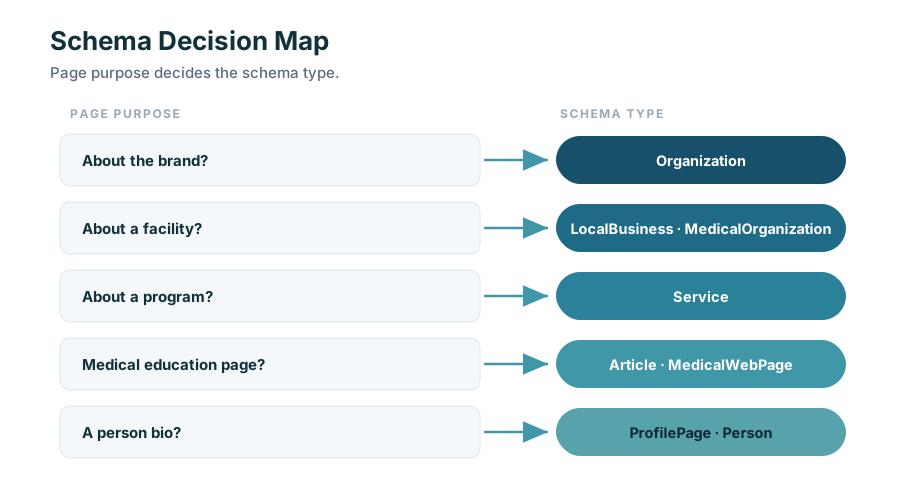
Use Schema To Confirm Visible Rehab Facts
Schema markup should match what visitors read on the rehab website. Add the facility name to schema only when the page displays that name. Describe a reviewer in schema only after the name, credential, and review role appear on the page.
Hidden claims create risk. Google schema policy requires markup that matches visible content, and a schema manual action removes rich-result eligibility while leaving web ranking untouched. Google can also ignore markup after policy problems.
| Visible fact | Schema field |
|---|---|
| Facility name | name |
| Phone number | telephone |
| Address | address |
| Program name | Service name |
| Reviewer | reviewedBy |
| Review date | lastReviewed |
| Author bio | Person |
| Page location | BreadcrumbList |
Start With Organization Schema For The Brand
The homepage or about page should hold Organization schema. Add name, legalName, url, logo, telephone, address, contact details, and trusted sameAs profiles. Google Organization documentation recommends the properties most useful to readers, with no required fields for organization markup.
Use one stable organization ID. Reference the same organization ID from service pages, location pages, and articles. A single ID connects the rehab brand, facility pages, authors, reviewers, and treatment services into one entity.
Assign Each Rehab Location Its Own Schema
Each facility page should use LocalBusiness, MedicalOrganization, or MedicalClinic. LocalBusiness schema can supply business hours, departments, and local details to Google Search and Maps.
Use MedicalOrganization when the site is a medical organization. Schema.org defines MedicalOrganization as a medical organization, such as a hospital, institution, or clinic. Use MedicalClinic when the location provides diagnosis or healthcare services. Match the type to the rehab website architecture you already publish.
| Facility type | Safer schema choice |
|---|---|
| Treatment brand with locations | Organization and MedicalOrganization |
| Licensed clinic | MedicalClinic |
| Outpatient center | MedicalClinic |
| Residential facility | MedicalOrganization or LocalBusiness |
| Sober living home | Organization or LocalBusiness |
Model Treatment Programs With Service Schema
A detox page, residential page, outpatient page, PHP page, IOP page, or dual diagnosis page can use Service schema. Schema.org defines Service as a service provided through an organization, with provider, areaServed, and serviceType.
Use Service schema only for programs the center provides. Name the provider, serviceType, service URL, areaServed, and location. Leave out treatment availability, insurance, or outcome claims unless the visible page already states those facts.
{
  "@context": "https://schema.org",
  "@type": "Service",
  "@id": "https://example.com/residential-treatment/#service",
  "name": "Residential Addiction Treatment",
  "serviceType": "Residential substance use treatment",
  "provider": { "@id": "https://example.com/#organization" },
  "areaServed": "San Diego, California",
  "url": "https://example.com/residential-treatment/"
}
Back Medical Articles With Visible Reviewer Proof
Use MedicalWebPage for rehab education pages about detox, withdrawal, medication-assisted treatment, dual diagnosis, crisis topics, and treatment choice. Schema.org defines MedicalWebPage as a web page with medical information and properties such as medicalAudience, lastReviewed, and reviewedBy.
Medical schema needs visible reviewer proof. A withdrawal page should show the reviewer name, credential, review scope, source list, review date, and update date. The same details belong in the markup. Our piece on when a rehab page needs a medical reviewer covers the visible side.
| Page element | Schema field |
|---|---|
| Article title | headline |
| Author | author |
| Medical reviewer | reviewedBy |
| Review date | lastReviewed |
| Update date | dateModified |
| Page topic | about |
| Breadcrumb trail | breadcrumb |
Use Article Schema For Rehab Resource Pages
Use Article schema for rehab blog posts, ask-the-expert pages, admissions articles, insurance pages, family resources, and level-of-treatment resources. Article markup helps Google understand the title, image, date, and author.
Add headline, description, image, author, publisher, datePublished, dateModified, and mainEntityOfPage. For clinical content, pair Article with MedicalWebPage when medical information appears.
Link Every Author And Reviewer To Person Schema
A rehab website should hold author and reviewer bio pages. Attach Person schema to each author, clinical reviewer, medical director, therapist, and admissions expert. Use ProfilePage schema when a page centers on one person.
ProfilePage schema helps Google recognize a named author who shares first-hand experience. Related schema types can point back to that ProfilePage.
| Bio page detail | Schema field |
|---|---|
| Full name | name |
| Role | jobTitle |
| Employer | worksFor |
| Topic expertise | knowsAbout |
| Credential | hasCredential |
| Professional profile | sameAs |
| Photo | image |
| Bio URL | url |
Add BreadcrumbList To Every Template
BreadcrumbList schema should appear on service pages, location pages, resource pages, bio pages, and blog posts. A breadcrumb trail marks a page position in the site hierarchy and helps readers explore the site.
A rehab location page can use a short trail. A program page can use a program trail. Match the schema to the visible breadcrumb on the page.
Home > Locations > San Diego Rehab Center
Home > Programs > Medical Detox
Avoid FAQ Rich Result Promises
FAQ content still helps readers and AI systems. Google added a deprecation notice to its FAQ schema documentation on May 7, 2026, when FAQ rich results stopped appearing in Google Search. Google removes the Search Console report and Rich Results Test support in June 2026, and the Search Console API support in August 2026. FAQPage remains a valid schema type, and existing markup can remain in place without harm.
Use FAQ sections for direct answers, never as a rich-result sales pitch. Add FAQPage schema only when internal governance or another system needs it. Never pitch FAQ schema as a way to win the old FAQ search feature, because Google retired that display.
Avoid Review Stars For Your Own Rehab Center
A rehab center should avoid AggregateRating or Review markup for testimonials about itself. Google restricts LocalBusiness review markup to sites that capture reviews about other local businesses, and its schema policy treats fake or self-serving reviews as a violation.
Show lawful testimonials when consent and compliance allow them. Self-owned star markup creates search-policy risk and reader-trust risk at once. Use review content for genuine trust, never for star manipulation.
Avoid Product Schema For Treatment Programs
A treatment program should use Service schema, never Product schema. Product markup suits shopping pages, with richer Google Search treatment for price, availability, rating, and shipping. A rehab program needs no shopping-page signal.
Use Service for detox, residential, outpatient, PHP, IOP, and dual diagnosis pages. Use MedicalWebPage for medical education pages. Use MedicalOrganization or MedicalClinic for facility pages.
Build The Rehab Schema Stack In Order
Start with entity schema before page schema. The site needs one organization ID, one website ID, location IDs, service IDs, person IDs, and article IDs. Then connect each page to the right parent through a shared ID.
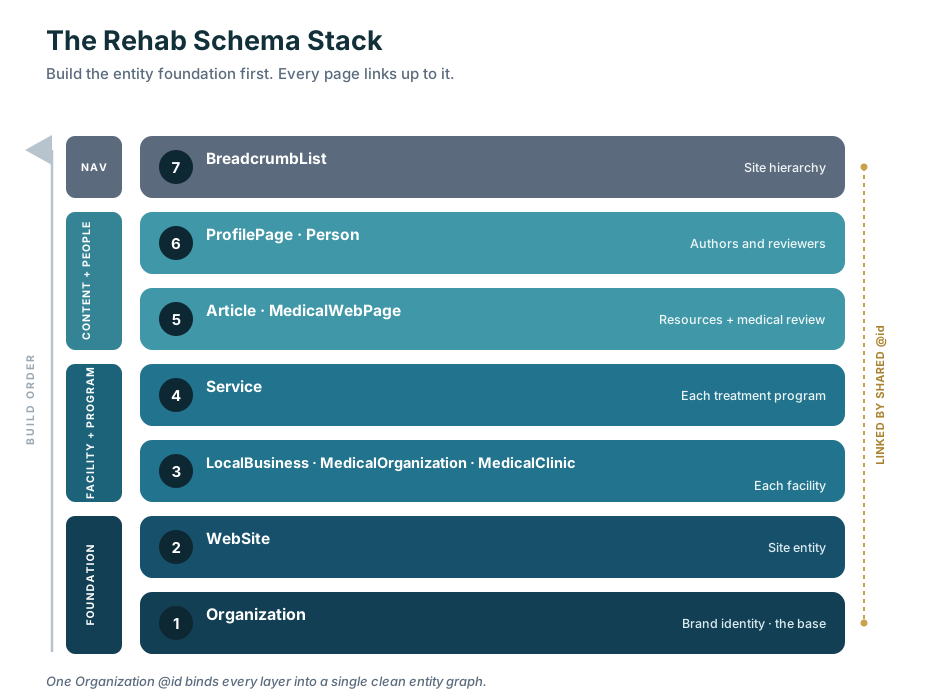
| Build order | Schema type | Page |
|---|---|---|
| 1 | Organization | Homepage or about page |
| 2 | WebSite | Homepage |
| 3 | LocalBusiness or MedicalOrganization | Facility page |
| 4 | Service | Program page |
| 5 | Article | Resource page |
| 6 | MedicalWebPage | Clinical education page |
| 7 | ProfilePage and Person | Author or reviewer bio |
| 8 | BreadcrumbList | Page template |
Schema For AI Search Should Match The Page
Google states that AI Overviews and AI Mode follow the same foundational SEO best practices as the rest of Search. A page needs indexing and snippet eligibility, with no added requirement for AI features. Google AI features documentation confirms that no special schema.org markup earns a spot in AI Overviews or AI Mode, though any markup you add should match the visible text.
For rehab sites betting on AI Overview visibility, schema still delivers value as a clean entity graph. It connects the organization, location, program, author, reviewer, article, and breadcrumb trail. AI systems resolve those relationships more safely when the visible page content matches the markup.
Schema Map For Rehab Pages
| Rehab page | Use | Skip |
|---|---|---|
| Homepage | Organization, WebSite | Duplicate organization blocks |
| About page | Organization | Fake awards |
| Location page | LocalBusiness, MedicalOrganization | Hidden address claims |
| Detox page | Service, MedicalWebPage | Product |
| Residential page | Service, BreadcrumbList | Fake availability |
| Blog article | Article | Unsupported reviewer |
| Withdrawal article | Article, MedicalWebPage | Missing review date |
| Reviewer bio | ProfilePage, Person | Unverified credentials |
| FAQ section | Visible FAQ content | Google FAQ rich-result promise |
| Reviews page | Visible testimonials | Self-owned AggregateRating |
Schema Quality Checklist
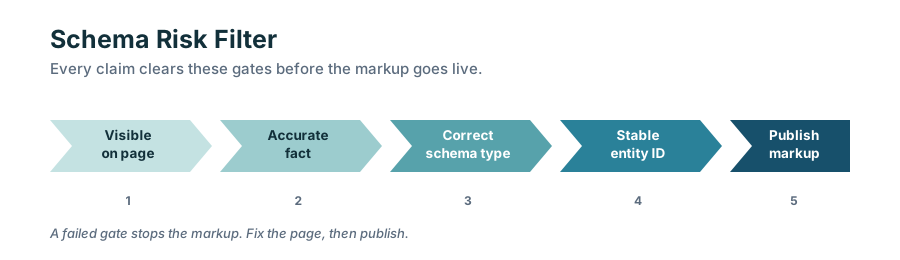
Check schema before publishing. Every marked item should match the page text, the page purpose, and the internal entity IDs. Google recommends validation through the Rich Results Test, URL Inspection, and Search Console monitoring after deployment. Fold the check into your technical SEO routine.
| Check | Pass standard |
|---|---|
| Visible fact match | Marked fact appears on the page |
| Right type | Schema matches page purpose |
| Stable ID | Main entity uses a permanent ID |
| Author proof | Bio page exists |
| Reviewer proof | Credential and review scope appear |
| Service proof | Program page states the service |
| Local proof | Address and phone match GBP |
| Review safety | No self-owned star markup |
| Validation | Rich Results Test passes |
| Maintenance | Updates follow page edits |
Final Answer For Rehab Websites
A rehab website needs schema markup for proof first and search display second. Use Organization, WebSite, LocalBusiness, MedicalOrganization or MedicalClinic, Service, Article, MedicalWebPage, ProfilePage, Person, and BreadcrumbList. Add only facts a reader can verify on the page.
Skip fake review stars, Product schema for treatment programs, unsupported medical reviewers, hidden address details, and FAQ rich-result promises. Schema should help Google, AI systems, and readers verify the same truth. Confirm the whole stack with a drug rehab SEO audit.
Frequently Asked Questions
What schema should a rehab website use first?
Start with Organization, WebSite, LocalBusiness or MedicalOrganization, Service, Article, MedicalWebPage, ProfilePage, Person, and BreadcrumbList. These types cover brand identity, locations, treatment programs, medical articles, people, and site hierarchy.
Should a rehab website use MedicalClinic schema?
Use MedicalClinic only when the location provides diagnosis or healthcare services. Schema.org defines MedicalClinic as a facility devoted to diagnosis or healthcare.
Should rehab websites use FAQ schema?
Visible FAQ content still helps readers and AI extraction. Google FAQ rich results stopped appearing in Search on May 7, 2026, though FAQPage remains a valid schema type you can leave in place.
Can schema markup help AI Overviews?
Schema can support page understanding, though Google requires no special schema.org markup for AI Overviews or AI Mode. Indexing, snippet eligibility, helpful content, and accurate visible text weigh more.
Should rehab websites add review star schema?
Avoid Review or AggregateRating schema for testimonials about your own center. Google restricts LocalBusiness review snippet markup to sites that capture reviews about other local businesses.
Get Expert Advice
Professional consultation for your business needs. Connect with our experts today.