Should a Rehab Center Reply to Negative Google Reviews?


Yes. A rehab center should reply to negative Google reviews with a short public message that protects privacy. The reply should acknowledge the concern, state a privacy limit, and invite private contact with the correct office.
Never confirm patient status. Never discuss diagnosis, detox, medication, discharge, billing, relapse, attendance, family details, insurance, or records in a public reply. Google lets verified businesses reply to Business Profile reviews and recommends replying as a best practice, in a conversational tone, never promotional. Treat the whole workflow as one visible part of your drug rehab SEO reputation work.
Reply Without Exposing Patient Privacy
A rehab reply has one job: show professionalism while protecting private information. A safe reply avoids case facts and sends the concern to a private channel.
| Reply part | Purpose |
|---|---|
| Acknowledge | show the concern was seen |
| Privacy limit | avoid public case discussion |
| Private contact | send the person to the correct office |
| Short close | end without argument |
Use a reply like the one below.
Thank you for sharing the concern. Our team protects privacy and are unable to discuss personal details online. Please contact our administrative office at [phone or email] for private review.
Google recommends short, personalized, prompt review replies that follow Google content policies. Recent Google enforcement also flags replies that add discounts, offers, or sales links, and a plain tone remains safest.
Never Reveal Patient Status In A Public Reply
A rehab center should never confirm or deny that a reviewer received treatment. The review might already mention treatment details, though the facility reply should add zero private facts.
| Detail | Risk |
|---|---|
| patient status | confirms a treatment relationship |
| admission date | reveals a timeline |
| discharge reason | reveals treatment status |
| diagnosis | reveals health information |
| medication | reveals clinical information |
| relapse | reveals substance use detail |
| insurance denial | reveals payment and health context |
| family dispute | reveals private context |
| attendance detail | reveals program participation |
HHS OCR settled with Manasa Health Center for $30,000 in June 2023, after the New Jersey psychiatry practice disclosed the protected health information of four patients in replies to negative Google reviews. One hard rule drives the whole page: a patient who posts personal details in a review never waives HIPAA. A provider still must withhold every protected health fact, and even confirming patient status counts as a disclosure.
Treat Substance Use Records As Higher Risk
Rehab review replies need extra caution, because substance use disorder records hold added federal protection. 42 CFR Part 2 restricts the use and disclosure of substance use disorder patient records held at a federally assisted Part 2 program.
Part 2 also limits acknowledgment of a patient at a facility publicly identified for substance use disorder treatment. A center publicly known as a rehab facility generally can never confirm that a person is a patient without written consent. A 2024 final rule aligned Part 2 with HIPAA, and OCR now enforces both, which raises the stakes on a public reply.
Use the strict rule below.
Never confirm.
Never deny.
Never debate facts.
Never mention records.
Send the concern to a private channel.
Use A Short Reply Formula
A safe public reply needs fewer words than most teams think. Long replies add room for privacy errors.
Follow the formula below.
Concern acknowledged.
Privacy boundary stated.
Private contact offered.
Reply ends.
Example for a general complaint:
Thank you for the feedback. We protect privacy and are unable to discuss personal details online. Please contact [office name] at [phone or email] for private review.
Example for a billing complaint:
Thank you for raising the concern. We are unable to discuss account details in a public review. Please contact [billing office] at [phone or email].
Example for a staff complaint:
Thank you for sharing the concern. We are unable to discuss private details online. Please contact [leadership role] at [phone or email] for review.
Avoid Defensive Replies
A defensive reply can create more harm than the review. The goal is privacy, process, and professionalism, never winning a public argument.
| Unsafe reply pattern | Why it fails |
|---|---|
| You were here for two days | confirms admission |
| Your insurance denied payment | exposes account and health context |
| Staff followed your discharge plan | reveals treatment status |
| You missed groups | reveals attendance |
| Your family called us | reveals family context |
| You came for alcohol detox | reveals treatment reason |
| You signed the policy | suggests record access |
When a reply needs facts from a chart, that reply never belongs in public.
Flag Reviews That Break Google Policy
Some reviews deserve a privacy-safe public reply and a Google policy flag. Google prohibits fake engagement, paid reviews, incentivized reviews, conflict-of-interest reviews, and rating manipulation.
| Review issue | Next step |
|---|---|
| fake experience | flag in Business Profile |
| competitor attack | document and flag |
| threat or harassment | flag and escalate |
| private health details | send to compliance |
| staff doxxing | flag and document |
| unrelated content | flag for relevance |
| incentive demand | save proof and flag |
Google removes only reviews that break a policy, and a flag will never erase honest criticism. Flagging never replaces a safe public reply, and the public response still needs privacy-safe wording.
Set Approval Rules Before Replies Go Live
A rehab center should assign review-response ownership before a crisis hits. A rushed front-desk reply can create privacy and brand risk.
| Role | Review job |
|---|---|
| marketing | draft neutral wording |
| compliance | approve sensitive replies |
| admissions lead | review service complaints |
| clinical lead | review clinical complaint category |
| legal counsel | review threats, PHI, Part 2 risk |
| executive owner | approve high-risk replies |
Save screenshots, drafts, approval notes, and posted replies. A written record helps the team hold a consistent review process.
Use A Safe Review Workflow
Every negative review should move through the same process. A repeatable workflow reduces emotional replies and privacy errors.
Parking complaints need a lighter review. Clinical, billing, safety, discharge, medication, records, and patient-status complaints need compliance review before publication.
Review Replies Support Local Trust
Review replies help families, referral partners, and local users judge how the center responds under public scrutiny. Google notes that replying shows a business values feedback and can help it stand out.
Google local ranking uses relevance, distance, and prominence, and Google connects prominence with review count and rating. Strong replies strengthen the entity trust behind a Google Business Profile.
| Public signal | Trust role |
|---|---|
| verified profile | confirms local presence |
| review volume | shows a public footprint |
| reply pattern | shows active management |
| privacy-safe reply | shows compliance discipline |
| current photos | supports facility proof |
| consistent phone and address | supports entity trust |
A silent profile can look abandoned. A defensive profile can look unsafe. A calm, privacy-safe profile can support local trust across search and AI Overview results.
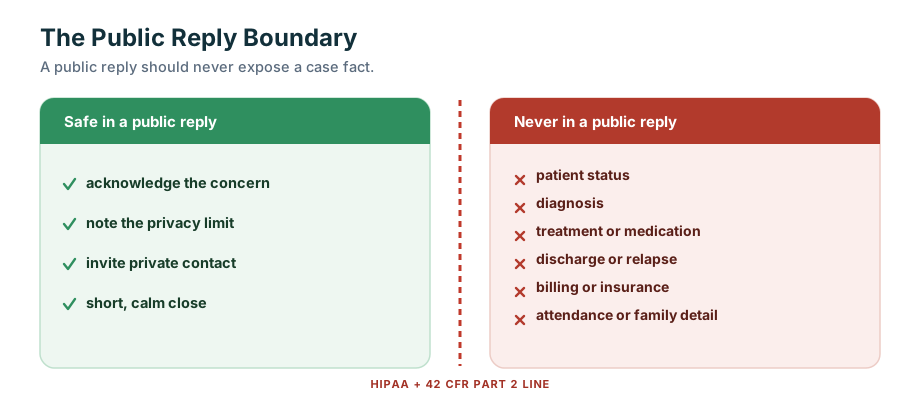
The Public Reply Boundary At A Glance
Safe wording and unsafe wording sit on opposite sides of one clear line. The visual below shows the split.
Safe Reply Templates
Use these as draft wording. Compliance or counsel should approve final policy language.
General Negative Review
Thank you for sharing the concern. We protect privacy and are unable to discuss personal details online. Please contact [office name] at [phone or email] for private review.
Safety Concern
Thank you for bringing the concern forward. Privacy rules prevent public discussion of personal details. Please contact [leadership role] at [phone or email].
Billing Concern
Thank you for raising the concern. We are unable to discuss account details in a public review. Please contact [billing office] at [phone or email].
Staff Concern
Thank you for the feedback. We are unable to discuss private details online. Please contact [leadership role] at [phone or email] for review.
Unknown Reviewer
Thank you for the note. We are unable to verify or discuss private details in public. Please contact [office name] at [phone or email].
Train Staff On The Review Boundary
Staff need a written rule for Google reviews. A review that reveals details never lets the center reveal more in public.
| Topic | Staff rule |
|---|---|
| patient status | never confirm or deny |
| PHI | never place health facts in a reply |
| Part 2 | treat SUD treatment details as high-risk |
| billing | send to private contact |
| safety allegation | escalate before posting |
| staff names | avoid public debate |
| screenshots | save before edits or removals |
| tone | brief, calm, private-contact invite |
The safest reply protects the person first and moves the concern to the proper review channel.
Answer For Rehab Owners
A rehab center should reply to negative Google reviews with short, privacy-safe wording. The reply should acknowledge the concern, protect private information, and invite private contact with the proper office.
Avoid public case details, treatment facts, billing details, patient status, diagnosis, medication, discharge, relapse, attendance, family issues, and records. The goal is privacy, professionalism, and a Google Business Profile that families trust. Fold review discipline into a full drug rehab SEO audit, and treat every legal point here as a prompt for counsel, never as legal advice.
Frequently Asked Questions
Should a rehab center reply to every negative Google review?
A rehab center should reply to most negative Google reviews with a short, privacy-safe public message. Sensitive reviews need compliance review before publication. Google allows verified businesses to reply to Business Profile reviews.
Can a rehab center mention that the reviewer was a patient?
A rehab center should never confirm or deny patient status in public. HHS OCR fined Manasa Health Center $30,000 after the practice disclosed protected health information of four patients in negative online review responses.
What should a rehab center say in a negative review reply?
Use a short message that acknowledges the concern, states a privacy limit, and invites private contact. Avoid treatment, diagnosis, insurance, discharge, attendance, medication, relapse, family issues, account details, and records.
Can a rehab center remove a fake Google review?
A rehab center can flag reviews that appear to break Google policy. Google prohibits fake engagement, paid reviews, incentivized reviews, conflict-of-interest reviews, and rating manipulation, and removes only reviews that violate a policy.
Do negative review replies help rehab local SEO?
Review replies can support Business Profile quality and local trust. Google local ranking uses relevance, distance, and prominence, and Google connects prominence with review count and rating.
Get Expert Advice
Professional consultation for your business needs. Connect with our experts today.